make preferable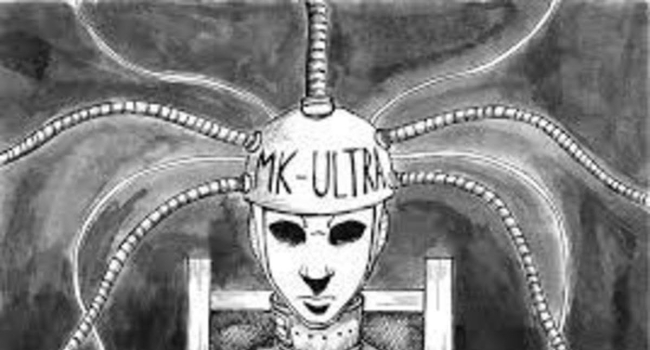
There are pages in the history of science that one wishes could be glued shut forever. The most terrifying thing about them is not the "mad scientists" of Hollywood horror films, but the systematic approach. It is when gruesome experiments on living humans and animals are approved at the highest government level, ministerial budgets are signed, and protocols are kept with the precision of an experienced accountant.
We have gathered the main historical cases where official science and defense agencies crossed the "red line," turning living organisms into expendable material.
MK-Ultra: the state hunt for "mind hacking"
In the early 1950s, at the height of the Cold War, the CIA was gripped by paranoia. Fearing that the USSR and China had developed "brainwashing" technologies, American intelligence agencies launched the top-secret MK-Ultra program. This was not a single laboratory, but a massive conveyor belt of dozens of subprojects deployed in universities, prisons, and psychiatric clinics. The goal was ambitious and terrifying: to learn how to completely control the human mind, break willpower during interrogations, and erase memory.
The methods resembled sophisticated torture. Subjects — who included prisoners, drug addicts, mental hospital patients, and ordinary citizens (often without their knowledge) — were injected with lethal doses of LSD, mescaline, and other hallucinogens. The narcotic chaos was reinforced with hours of sensory deprivation, brutal electroshock in non-medical modes, and sleep deprivation. They attempted to "erase" people to the state of a blank slate in order to then program new behavioral patterns onto their subconscious.
In 1973, when exposure loomed, CIA leadership ordered the destruction of key MK-Ultra archives. The remaining scraps of information shocked the public: the project did not create the "perfect spy," but it ruined hundreds of lives, causing irreversible psychoses in the subjects. Today, in global bioethics, this case is considered the ultimate symbol of how intelligence services can turn medicine into a weapon.
The Tuskegee study: 40 years of conscious betrayal
While in the MK-Ultra case people were actively broken, in Alabama the state committed a crime through inaction. In 1932, the US Public Health Service began a syphilis study in the city of Tuskegee. Hundreds of the poorest African Americans, mostly farmers, were recruited into the experiment. They were promised free treatment for mysterious "bad blood" — a local term for a whole cluster of illnesses.
In reality, no treatment was ever planned. The true task of the medics was long-term observation of how syphilis slowly and painfully destroys the human body, leading to blindness, paralysis, and death. The worst happened in the 1940s, when penicillin became the official, accessible, and dirt-cheap cure for syphilis. Instead of treating the participants and closing the project, the doctors hid the existence of the medicine from them. Furthermore, researchers deliberately blocked the men from accessing outside medical programs so that they would not, God forbid, recover and ruin the statistics.
The experiment lasted a record 40 years and was closed only in 1972 after a leak to the press. By that time, dozens of people had died, infected their wives, and their children were born with congenital syphilis. The Tuskegee project permanently undermined the African American community's trust in government medicine and forced the world to fundamentally rewrite the rules of informed patient consent.
Nazi medical experiments: sadism in an academic wrapper
The experiments conducted in German concentration camps (Dachau, Auschwitz, Buchenwald) are often written off as pure sadism. However, in SS reports, it was all framed as cutting-edge military medicine. Nazi doctors sincerely believed they were advancing science for the sake of saving the soldiers of the Third Reich.
Inmates of Dachau were kept in pools of ice water for hours, with doctors recording points of frostbite and testing savage ways of rewarming (such as with boiling water). This was how they tested rescue methods for downed Luftwaffe pilots. In barometric chambers, they simulated conditions of extreme altitude and low pressure — the subjects' blood literally boiled, and their lungs exploded. Meanwhile, in other camps, people were mass-infected with typhus and tuberculosis to test dubious vaccines, mutilated surgically, and irradiated with radiation as part of forced sterilization programs. A particular nightmare was Josef Mengele's "research" on twins, aimed at unlocking the secrets of racial genetics.
Retrospective analysis showed that from a scientific standpoint, most of these experiments were meaningless, and their methodology was worthless. The Nuremberg trials passed judgment not only on the executioners in white coats, but on such " science" as a whole, creating the Nuremberg Code — the first international set of rules banning any medical experiments without a person's voluntary consent.
Nuclear test sites: radiation experiments and planetary risk
On July 16, 1945, the Trinity test — the first nuclear explosion in history — took place in the New Mexico desert. Today, few remember that the physicists of the Manhattan Project went into it under conditions of colossal uncertainty. Serious calculations were conducted within the team regarding whether a plutonium explosion might trigger a chain reaction that would "ignite" the Earth's atmosphere or the world ocean. The risk was considered minimal, but theoretically non-zero. The political leadership decided to gamble with the planet for the sake of possessing a superweapon.
But if Trinity was an experiment on physics, the nuclear arms race that followed turned into experiments on humans. In the US and several other countries, secret radiobiological research was conducted right up into the 1970s. Hospital patients were given injections of plutonium under the guise of "vitamin cocktails," while cancer patients and pregnant women were subjected to extreme radiation to find the dosage limits of human tissue endurance. Naturally, people had no idea they were being used as guinea pigs in atomic tests by defense agencies. In the 1990s, the US government had to officially apologize to the victims of these programs and pay millions in compensation.
Living weapons: homing pigeons, incendiary bats, and kamikaze dogs
When standard technology fell short, military engineers tried to turn living creatures into weapons. The design of these experiments balanced on the edge of the absurd and extreme cruelty.
Project Pigeon: The famous American psychologist B.F. Skinner suggested using birds as the "brain" of guided missiles. Pigeons were placed in the nose compartment of a missile in front of a screen projecting an image of the terrain. The birds were trained to continuously peck at the silhouette of an enemy ship or building; the pecks transmitted commands to the control rudders, adjusting the flight. Remarkably, tests showed high accuracy, but the project was shelved due to the advent of electronic guidance systems.
Bat bombs: Another American project during World War II involved attaching tiny incendiary bombs with timers to thousands of bats. According to the plan, the bats were to be dropped in containers over Japanese cities. The animals would scatter into the attics of wooden houses, causing hundreds of fires. The experiment was shut down when, during testing, bats that escaped into the wild burned an American airbase chief's hangar and car to the ground.
Anti-tank dogs: A tragic page of Soviet wartime experience. Dogs were trained to look for food underneath tanks, after which packs containing explosives and a detonator were fitted onto them, and they were sent under enemy armor. In practice, the experiment turned into a disaster: on the battlefield, the dogs were terrified by the din, lost their orientation, and ran back into the trenches, blowing up their own soldiers. Furthermore, trained on Soviet diesel tanks, the animals in battle ignored German armor, which ran on gasoline, orienting themselves by the familiar smell of "their own" vehicles. This practice was quickly abandoned due to its inefficiency and extreme cruelty to the animals.