make preferable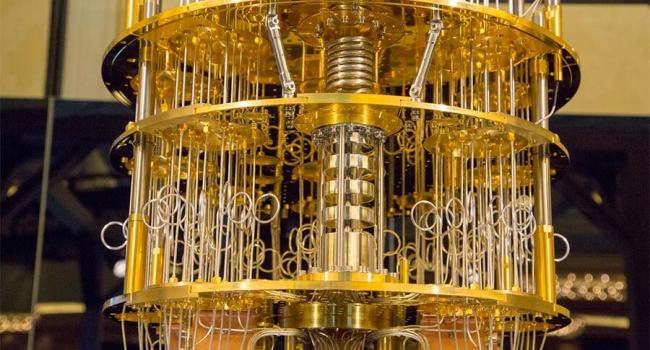
Imagine a computer that can solve a problem in a single second that would take all the processors in the world thousands of years to complete. This isn't science fiction; it's a quantum computer. Its invention is often compared to the discovery of electricity — it will completely transform our technology.
Let’s break down how this "superbrain" works without mind-boggling formulas or physics textbooks.
What is the problem with ordinary computers?
Our laptops and smartphones run on bits. A bit is a tiny switch that can only be in one of two positions: either 0 or 1.
When a regular computer solves a complex problem — like searching for a password or finding a route for thousands of cars — it acts like a person in a maze: it goes down one path, hits a dead end, turns back, and tries the next. If there are billions of options, the computer simply freezes under the workload. We have nearly hit the ceiling of their capabilities.
A quantum computer operates on a completely different logic. Instead of bits, it uses qubits. These are made from real microparticles, such as atoms or photons. Qubits have a superpower: they can be both 0 and 1 at the same time. Therefore, while a regular computer checks options one by one, a quantum computer checks all billions of paths in the maze simultaneously. This results in an explosive increase in speed.
Why won't there be a quantum laptop on your desk?
Building a quantum computer is incredibly difficult. Microparticles are extremely finicky: any rustle or warmth causes them to lose their properties, and the calculations break down. For them to work properly, they literally need to be frozen — cooled to a temperature of -273.15°C (which is colder than deep space).
That is why a quantum computer is a massive installation in a closed laboratory. You can't just bring a laptop like that to the beach. But everyday people won't need to: in the future, we will be able to simply connect to quantum processing power remotely via the internet.
Do you urgently need to retrain?
If you are a regular office employee, no. The programs you use won't look any different on the outside; they will just run faster. However, there will be several fields where knowing how quantum logic works will become a major advantage.
In 5–7 years, marketers and analysts will have to adapt to a shift in mathematical frameworks. Quantum logic will completely eliminate the compromises of classical Big Data analysis, where accuracy is sacrificed for speed. Thanks to quantum superposition and algorithms like Grover's search or quantum machine learning (QML), the problem of combinatorial explosion will vanish. Machines will be able to instantly calculate billions of hidden connections in terabytes of unstructured datasets, providing absolute precision for predictive models and real-time micro-segmentation.
The value of a specialist will shift from routine spreadsheet processing to the ability to formulate tasks for quantum systems. Those who master the logic of quantum gates and Python-based libraries like Cirq or Qiskit today will become data architects of a fundamentally new level, while others remain limited by the technological dead-end of conventional computers.
Spheres of real breakthrough
All these technological shifts lead to one main thought: a quantum computer is not just an upgraded version of your laptop, but a fundamentally new tool that will overturn the very logic of handling information.
First and foremost, it will reset modern cybersecurity. Quantum machines are capable of cracking the most secure banking encryption within hours instead of thousands of years, and simply making passwords longer won't help here — the world will have to completely overhaul protection systems into new, "post-quantum" ones. However, this same colossal computational resource will open doors to technological breakthroughs that previously seemed impossible. For instance, in medicine and pharmaceuticals, accurate molecular modeling at the quantum level will replace years of blind lab experiments with the rapid digital creation of drugs for incurable diseases.