make preferable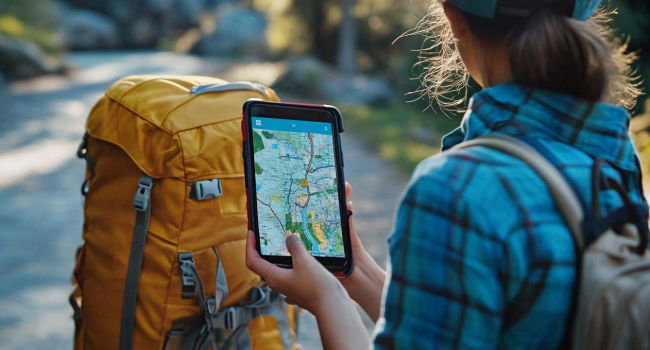
July is the peak of the holiday and travel season. Someone is already packing bags, someone is planning routes, and someone is choosing things that will make the journey easier and more comfortable. Modern gadgets have long become a part of travel: they help you work on the go, stay entertained, capture impressions, and organize the space around you.
We have gathered devices as solutions to five typical traveler problems.
Chaos in baggage and organization of things
A problem that is underestimated until the first difficult trip. Packing for a trip sometimes turns into a source of additional stress: not forgetting anything, fitting everything, but equally important, finding it quickly on the way if the need arises. But often chargers, documents, tech, and clothes easily turn into a chaotic set of things. However, there is already a solution: the Nomatic Travel Backpack storage system.
This backpack is often viewed as an example of "industrial design" in an everyday item. Its main idea is maximum structured storage. Inside, there are separate zones for a laptop, tablet, chargers, documents, and clothes. Thanks to this, things do not mix up, and they are easy to access even on the go. A feature of the design is the suitcase-style opening. This allows you to avoid "digging" into the backpack from top to bottom, and instead see all its contents at once. For travelers, this saves time and reduces chaos when packing. Small details are also well thought out: cable channels, hidden pockets, mounts, and reinforced handles for different ways of carrying.
Noise, fatigue, and the need to disconnect from the surrounding world
Long flights, airports, trains, and layovers—all of this quickly wears you out. The main task here is to create a personal "sound space" where you can rest or focus. The iPad in its base version remains the most "flexible" device for travel. It covers several scenarios at once: entertainment, work, learning, and communication. The screen with good color reproduction makes it convenient for movies and TV shows on the road, and the performance is sufficient for browsing, taking notes, video calls, and light office tasks. It is also important that the device works for a long time without recharging, which is critical during flights or long trips. A separate plus is the huge ecosystem of applications. You can turn your iPad into an e-book, a mini-laptop with a keyboard, a graphics tablet, or an entertainment center for children.
Another useful gadget is the Sony CH-720N—noise cancellation without overpaying. These headphones are focused on practicality. Their main task is to eliminate external noise and create a comfortable sound environment on the road. Active noise cancellation effectively reduces the noise of airplanes, trains, and city transport. At the same time, the design remains lightweight, which is important for long-term wear—for example, during flights. The sound is tuned universally: podcasts, movies, and music sound balanced. The quality of voice communication is also worth noting—the microphones transmit speech quite well even in noisy places.
Without the Internet: navigation and translation on the road
When traveling, it is especially important to be prepared for situations without the Internet—on an airplane, with poor roaming, or in places with an unstable connection. In such conditions, not only entertainment features but also functional capabilities of devices become key: pre-downloaded offline maps allow you to navigate an unfamiliar city, build routes, and find points of interest without a network connection, while offline translators help you explain yourself at a basic level—from ordering food to talking to a taxi driver or asking for directions. As for entertainment, two interesting gadgets will help here: the Kindle Paperwhite and the RayNeo Pocket TV.
The Kindle Paperwhite is one of the most convenient readers for the road. The e-reader is designed specifically for long reading sessions without eye fatigue. The screen with "electronic ink" technology does not glow like a smartphone, but reflects light, making reading more natural. This is especially important on airplanes and night trips. The updated version received a faster page response and a larger display, which reduces the number of page turns and makes the text more comfortable to read. The main plus of Kindle is autonomy. One charge lasts for weeks of use, and the internal memory allows you to store thousands of books at the same time.
The RayNeo Pocket TV is a device that works as a portable media player that turns any screen or compatible device into a content source. Running Google TV, the user gets access to all major streaming services and applications. However, using it offline will require advanced preparation. You can download movies and TV shows in advance and watch them without the Internet, for example on an airplane. An additional plus is the large amount of memory and support for expansion cards, making the device a full-fledged "media storage for the road."
Memories: how to preserve a trip not only in memory
Travels are quickly forgotten in the stream of photos on a phone. Separate devices help make impressions more "tangible." The Fujifilm Instax Mini EVO is a hybrid of a digital and instant camera. This is not just a "polaroid." The Instax Mini EVO combines digital shooting and instant printing, which gives flexibility in choosing a frame. First, the photo can be viewed, edited, or the best option can be selected, and then printed. This reduces the number of failed shots compared to classic instant cameras. In parallel, the device saves digital copies, allowing you to share photos on social networks or keep them in an archive. In travel, this turns into a tool for creating "physical memories"—pictures that can be immediately gifted or saved as a souvenir.
The GoPro Hero 11 Black is a camera for active trips. This is the standard for action shooting. The camera is designed for extreme conditions: water, dust, impacts, and temperature changes. The main value is image stabilization and a wide viewing angle, which allows you to shoot dynamic scenes without complex settings. It is used in trips where mobility is important: hiking, mountains, diving, cycling. The camera is easily attached to the body, helmet, or equipment, freeing up your hands.