make preferable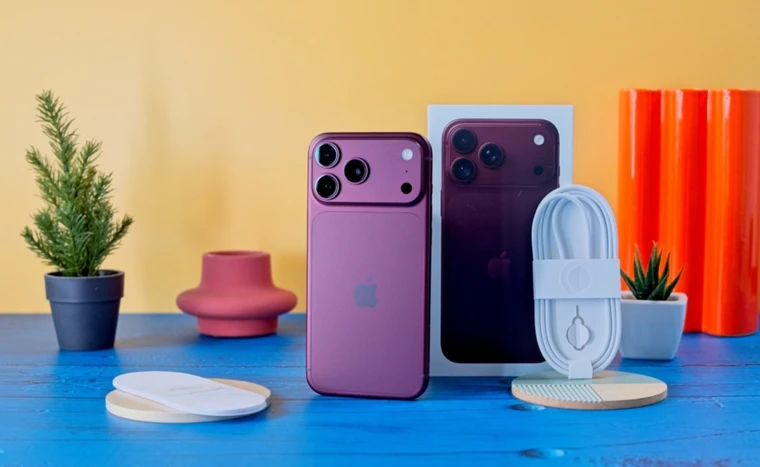
Apple did not stage a revolution with the iPhone 18 Pro and 18 Pro Max, but it noticeably refined the key components of its flagship phones. A variable aperture, the new 2nm A20 Pro chip, professional camera controls, and record-breaking battery life make the Pro lineup one of the most well-rounded in recent years.
The foldable iPhone Duo is drawing some of the attention, but it is the regular Pro models that received most of the serious hardware upgrades. Moreover, the iPhone 18 Pro and 18 Pro Max are almost identical in capabilities: the difference between them mainly comes down to size, display diagonal, and battery capacity.
Here are five changes that could genuinely be a reason to upgrade.
1. A variable aperture has finally arrived in the main camera
The main photography upgrade is a 48-megapixel Fusion camera with a mechanical variable aperture. Apple has finally allowed the lens to physically change the amount of incoming light depending on shooting conditions.
In low light, the aperture opens wider so the sensor can capture more light. In bright sunlight, it closes down instead. This is especially useful for portrait and group photography, where it is important to keep not only the main subject sharp, but also the background.
For those who prefer to control their shots manually, Apple has added direct aperture control to the Camera app. This is no longer a software simulation of background blur, but a change in the lens’s optical parameters.
For mobile photography, this is perhaps the most noticeable generational change.
2. The A20 Pro has moved to 2nm
At the heart of the iPhone 18 Pro and 18 Pro Max is the A20 Pro — Apple’s first mobile chip built on a 2-nanometer process.
The processor features six CPU cores, an updated neural engine for on-device AI task processing, and seven-core graphics. The chip design also uses an approach familiar from the Apple Silicon M5: 12GB of RAM is integrated directly into the package.
Graphics performance has increased especially noticeably — by around 40% compared with the previous generation. In practice, this means not only higher frame rates in demanding games, but also more stable performance under sustained loads.
To ensure performance is not held back by overheating, Apple improved the vapor chamber inside the chassis. This should help the smartphone maintain high performance for longer during gaming, video recording, and other demanding tasks.
3. The camera has become much more interesting for professional shooting
One new lens was not enough for Apple. The standard Camera app now includes expanded manual controls, including shutter speed, white balance in kelvins, and a real-time histogram.
The latter is especially useful in difficult lighting: it lets you monitor blown highlights and overly deep shadows directly while shooting.
Tools for controlling image texture and grain have also appeared. They allow you to make a photo softer and remove excessive processing sharpness right while shooting, without sending every frame for post-processing.
Another new feature is the “reference shot.” The iPhone stores protected and signed sensor data that can confirm a photo’s origin and distinguish a camera shot from an image generated by a neural network.
4. The iPhone 18 Pro has finally come close to two-day battery life
Battery life has become another notable advantage of the new generation. Combined with the more energy-efficient A20 Pro and a higher-capacity battery, the eSIM version of the iPhone 18 Pro is capable of delivering up to 36 hours of continuous video playback.
For the iPhone 18 Pro Max, that figure reaches 45 hours.
In a real mixed-use scenario, this means a substantially larger safety margin — the smartphone should confidently last nearly two days without recharging.
Apple also updated the Power Delivery protocol. Charging brings the battery to the first 50% faster, while improved cooling allows it to sustain high power for longer without a significant drop in current due to heat.
5. Dynamic Island has become smaller, but learned to show more
For the first time in a long while, Apple has physically reduced the size of Dynamic Island. The Face ID components have become more compact, so the cutout takes up slightly less space on the screen.
The change is small, but especially noticeable when watching videos and other full-screen content.
At the same time, Apple has expanded Dynamic Island’s software capabilities. It can now display up to three active events at once. For example, a user can see a timer, delivery status, and a sports score without switching between apps.
In other words, the core idea of Dynamic Island remains the same, but the space around the cutout is now used more efficiently.
What else has changed
Apple also refreshed the look of the smartphones. The matte rear panel now matches the aluminum frame better in tone. The iPhone 18 Pro is available in Silver, Black, Glacier, and Burgundy.
The price has gone up as well. The iPhone 18 Pro starts at $1,199, while the iPhone 18 Pro Max starts at $1,299 for the 256GB version.
Is it worth upgrading to the iPhone 18 Pro?
The iPhone 18 Pro does not try to impress with a single radical feature. Apple took a different path: it improved several components at once that directly affect everyday smartphone use.
The variable aperture makes the camera more flexible, the A20 Pro boosts performance and energy efficiency, professional tools give photographers more control, the battery increases runtime, and the smaller Dynamic Island frees up a bit of extra screen space.
As a result, the iPhone 18 Pro looks more like a carefully refined flagship than an experimental generation. For owners of older iPhones, this set of changes could be a compelling reason to upgrade. But for those already using a recent Pro model, the question will be how important these particular improvements are.