make preferable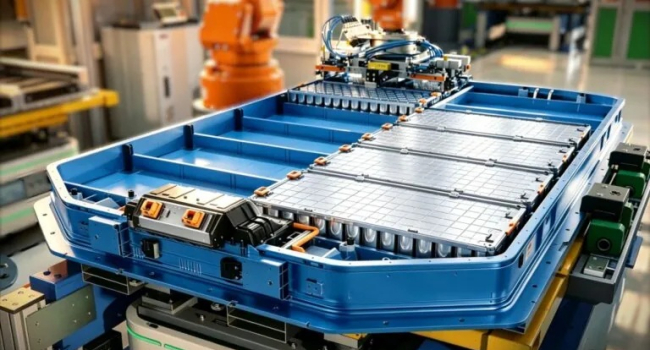
On Monday, Contemporary Amperex Technology Co., Limited unveiled its Tener sodium-ion energy storage system at a presentation event in Munich, Germany. According to the company, this marks the beginning of a new era in large-scale, lithium-free grid battery systems, Carnewschina reports.
Designed for industrial facilities, the system can withstand 15,000 charge-discharge cycles at 25°C, which corresponds to a design lifespan of 25 to 30 years while retaining at least 70% of its capacity. This is approximately double the lifespan of most lithium iron phosphate (LFP) installations in operation today.
Technical Specifications
Each Tener module boasts a nominal capacity of over 30 MWh with a total weight of less than 42 tons, allowing a 1 GWh facility to be built using just 34 modules. At -20°C, the system retains over 92% of its capacity due to CATL’s proprietary "dipole wide-temperature range" technology. Meanwhile, at +45°C, it can withstand over 10,000 cycles without forced cooling or additional thermal insulation.
Special attention was paid to energy efficiency. According to CATL representatives, an optimized top-ventilation system and liquid-cooling architecture helped reduce the system's parasitic energy consumption to 1%—half the industry average of 2%. The noise level stands at 65 dB, which is about 10 dB lower than traditional equipment, making the system more suitable for deployment near residential areas.
Supply Chain and Commercialization
CATL announced that it has established a complete supply chain for sodium-ion batteries, with mass production of anode and cathode materials already underway. The company is scaling up its production capacity: 40 GWh of manufacturing in Fuding and an additional 160 GWh planned in Jining. In April, CATL signed a 60 GWh sodium-ion battery supply agreement with energy storage system integrator HyperStrong—the largest sodium-ion battery order in history—as part of a three-year partnership, Electrek.com reports.
Domestic deliveries in China are scheduled for September 2026, with a target of 1 GWh by the end of the year. The global market rollout is slated for 2027.