make preferable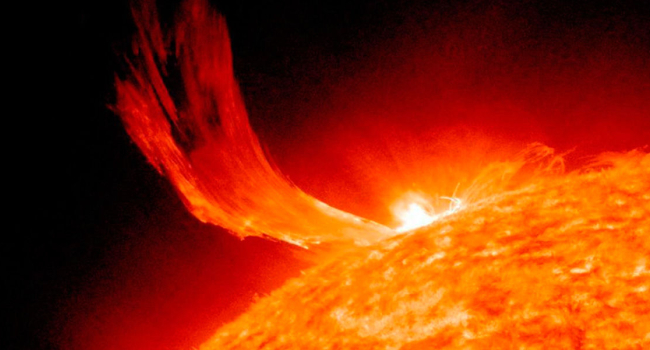
Scientists at the Laboratory of Solar Astronomy of the Space Research Institute (IKI) of the Russian Academy of Sciences have noted a noticeable decrease in solar activity. According to them, the star is gradually entering its traditional summer "hibernation," which this year coincides with the overall decline of the 25th solar cycle.
The laboratory noted that solar activity is visibly falling into the traditional summer hibernation, to which is now added the general situation of the solar cycle decline, adding that the star is rather dull and there is nothing to look at.
What is happening now
At present, only one active group of sunspots remains on the visible side of the Sun — No. 4465. Despite its modest size, it has a fairly high magnetic complexity of the Beta-Gamma class. When the energy reserve in this group is exhausted, solar activity could drop to practically zero.
Forecast for the coming weeks
According to calculations, no powerful flares or serious geomagnetic storms should be expected in the next 30 days. The space weather forecast for this period is predominantly "green" — calm.
Context
Let us recall that in early June, the Sun was showing elevated activity: two strong M-class flares occurred, as well as a rare phenomenon — a "black eruption," when a cloud of neutral hydrogen temporarily covered part of the star's bright surface. Now, however, the Sun is returning to a more typical calm summer state.
In brief
Solar activity is noticeably decreasing and entering its traditional summer "hibernation," intensified by the overall decline of the current solar cycle. According to IKI RAS forecasts, no strong flares or significant magnetic storms are expected in the next 30 days. Activity could drop to practically zero after the energy in the only remaining spot group is exhausted. This is a calm period for space weather observers.