make preferable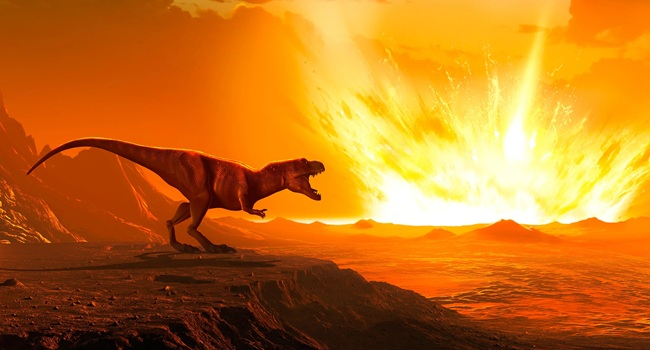
Sixty-six million years ago, a giant asteroid about 10 kilometers in diameter crashed into what is now the Yucatán Peninsula in Mexico. The consequences were catastrophic: global warming, acid rain, a nuclear winter, and the extinction of approximately 75% of species, including all non-avian dinosaurs. However, new research shows that the same impact that brought death to the surface created a long-lasting favorable environment for microbial life deep underground.
According to a study published June 9 in the journal Communications Earth & Environment, the hydrothermal system beneath the Chicxulub crater functioned for at least 8 million years — four times longer than previously thought. This makes it the longest-lived hydrothermal system on Earth known to have been created by an asteroid impact.
How a catastrophe created an oasis
The asteroid impact formed a crater nearly 200 kilometers wide and deeply heated the Earth's crust. Seawater from the Gulf of Mexico began to seep into the fractures and molten rock. A complex network of hot water-filled pores and cracks emerged — an ideal environment for microorganisms.
Study co-author Annemarie Pickersgill from the Scottish Universities Environmental Research Centre (SUERC) noted that wherever warm flowing water is found on Earth, life is found, and it has long been known that asteroid impacts create hydrothermal systems.
Earlier, in the early 2000s, models had shown that the system beneath Chicxulub could have lasted about two million years. However, the authors of those works themselves considered those estimates conservative. New calculations using modern data and more accurate algorithms confirmed that the reality was significantly more extensive.
Evidence from the depths of the crater
Key materials were obtained in 2016 during Expedition 364 of the International Ocean Discovery Program (IODP). Scientists drilled into the crater's "peak ring" — the raised central structure — and extracted rock samples from great depths beneath the seafloor.
Among the findings was potassium-rich feldspar (K-feldspar) that crystallized as a result of hot fluid circulation after the impact. Using argon-argon dating, the researchers determined that the mineral formed over a very long period — from the time of the impact 66 million years ago until approximately 58 million years ago. This directly indicates the duration of the hydrothermal system's activity.
What kept the system going for so long
To understand the mechanism behind its longevity, the team conducted updated computer simulations incorporating modern geological data, heat transfer models, and fluid movement. It turned out that several factors worked synergistically: the high permeability of the fractured rocks, residual heat from the impact itself, and the region's natural geothermal background.
Study co-author Evangelos Christou, a former doctoral student at the University of Glasgow, explained that advances in computational methods make it possible to model complex natural systems with unprecedented realism, bringing scientists closer to unraveling the mysteries of the chaotic physical processes that shape Earth and other planetary bodies over geological timescales.
Implications for the origin of life and the search for extraterrestrial organisms
Hydrothermal systems are considered among the most likely places where life could have originated on early Earth. If impact-generated features like these can exist for millions of years, they provide stable refuges where microbial communities can survive even the most massive catastrophes.
The study's results are particularly interesting in the context of the search for life on other celestial bodies. Mars, for example, experienced a huge number of asteroid bombardments and once had liquid water on its surface. Subsurface hydrothermal systems could have maintained habitable conditions far longer than surface environments.
Annemarie Pickersgill emphasized that porous, fractured impact-generated rocks create microenvironments where microorganisms are protected from radiation and extreme temperatures. She added that these conditions give life a chance to establish itself and thrive, and that this is likely how it happened on Earth billions of years ago.
In brief
The asteroid that caused a mass extinction 66 million years ago simultaneously created one of the longest-lived hydrothermal systems on Earth beneath the Chicxulub crater. New drilling data and advanced models show that hot underground water circulated there for at least 8 million years — from 66 to 58 million years ago. This discovery changes our understanding of how catastrophic events can promote the preservation and even development of life deep within a planet, and provides new targets for the search for microbial ecosystems on Mars and other celestial bodies.