make preferable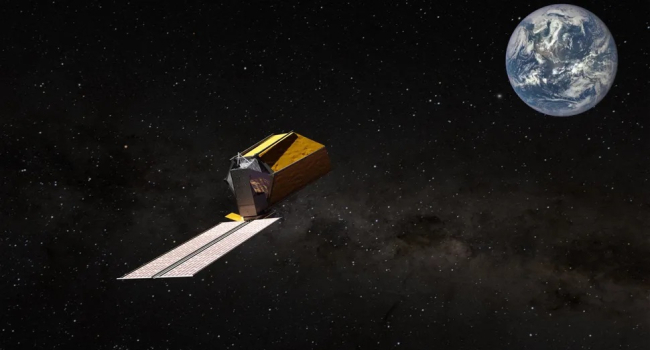
NASA is developing the Habitable Worlds Observatory (HWO) — the next flagship space telescope whose main mission will be to directly photograph Earth-like planets around nearby stars and analyze their atmospheres for biosignatures. The mission is still far from launch, but key engineering decisions that will determine its scientific value are already being made, according to Space.com.
A new study, published on the arXiv server, evaluated one of the most important parameters — spectral resolution — and showed how detailed HWO's dissection of light reflected from a planet needs to be to confidently find signs of life.
Why spectral resolution matters
Spectral resolution determines how precisely a telescope can distinguish between close wavelengths. The higher the resolution, the more detailed the atmospheric "fingerprint." However, increasing resolution requires more observation time, increases noise, and complicates instrument design.
To understand what requirements are needed for the search for life, the study's authors simulated how HWO would have seen Earth during different geological eras:
- The Archean (almost no oxygen)
- The Proterozoic (with low oxygen levels)
- The Phanerozoic (modern Earth with ~20% oxygen)
Required specifications
The results turned out to be quite achievable:
- For reliable detection of molecular oxygen (the main biosignal) in the visible range, a resolution of about 140 is sufficient.
- For ozone in the ultraviolet range, a resolution of just 7 is enough.
- In the near-infrared range, to confidently distinguish between carbon dioxide and carbon monoxide (so as not to confuse a living planet with a volcanically active one), a minimum of 40 is required, with about 70 being optimal.
These values are within the capabilities of modern optics. However, confidently detecting oxygen will require significantly reducing detector noise levels.
Limitations of the model
The authors emphasize that even confident detection of oxygen, ozone, methane, and water vapor is not definitive proof of life — each of these gases can have non-biological sources. HWO's task will be to identify the most promising candidates for further study.
In brief
NASA is creating the Habitable Worlds Observatory telescope, which will be able to directly study the atmospheres of Earth-like exoplanets for the first time. New modeling has shown that moderate spectral resolution is sufficient for searching for biosignatures on ancient Earth (and similar worlds): 140 in the visible range, 7 in the ultraviolet, and about 70 in the near-infrared. These requirements provide engineers with clear guidelines. If the telescope is built with such capabilities, it could become a powerful tool in the search for life beyond the solar system.