make preferable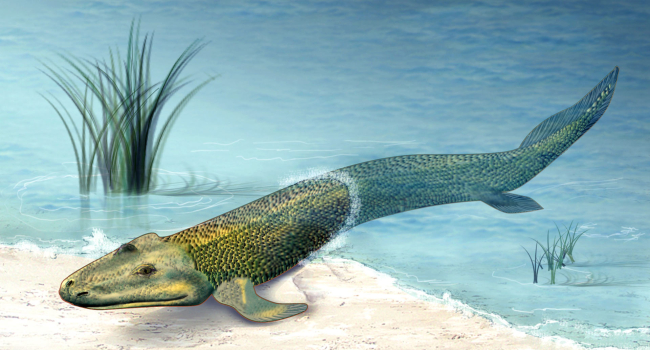
An international research team from the University of Cambridge has proposed a new explanation for one of the most mysterious periods in the history of life on Earth. According to their findings, the first multicellular animals reproduced exclusively asexually for tens of millions of years, which significantly slowed evolution and limited biological diversity.
The study results are published in the journal Nature Ecology & Evolution.
The mystery of the Ediacaran period
The Ediacaran period (roughly 635–541 million years ago) was the time when the first animals appeared. These organisms looked quite primitive: they had no complex organs, barely moved, and, as it turned out, preferred asexual reproduction — through cloning or the formation of specialized outgrowths from which new individuals grew.
To understand the reasons for such a prolonged evolutionary stagnation, scientists studied fossils about 574 million years old found in the Mistaken Point area of Canada. Based on this data, they created detailed computer models of ancient ecosystems.
Stability instead of progress
The modeling showed that in a relatively stable environment with sufficient resources and low competition, asexual reproduction was the most advantageous strategy. Related organisms formed large colonies and efficiently shared nutrients among themselves. At the same time, genetic diversity remained extremely low, which greatly slowed the emergence of new life forms.
The situation began to change when the environment became more unpredictable. Temperature fluctuations, storms, and other stress factors began to regularly destroy parts of populations. Under such conditions, organisms capable of producing genetically diverse offspring gained an advantage.
The transition to sexual reproduction as an evolutionary breakthrough
According to the authors, environmental stress was the main catalyst for the spread of sexual reproduction. Unlike cloning, it creates significant genetic diversity, increasing the chances of survival in a changing environment. Furthermore, sexual reproduction contributed to increased dispersal distances of animals and accelerated the emergence of new species.
The researchers believe that the transition to sexual reproduction triggered a second wave of evolutionary diversity in the Ediacaran period. This important change paved the way for the famous Cambrian "explosion of life" — a sharp increase in the number and complexity of organisms around 541 million years ago.
In brief
Scientists at the University of Cambridge have determined that the first animals on Earth reproduced predominantly asexually for approximately 100 million years, leading to prolonged evolutionary stagnation. The transition to sexual reproduction occurred under the influence of increased environmental stress and gave a powerful boost to the development of the animal world, paving the way for the Cambrian explosion. The research helps better understand the key mechanisms that shaped the early evolution of life on our planet.