make preferable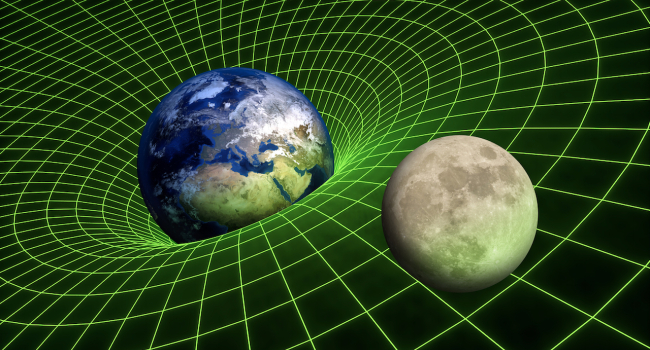
The gravitational constant (Big G), the oldest fundamental constant in physics, remains one of the least precisely measured quantities in science. Despite 340 years of research, scientists still do not agree on its exact value, creating persistent uncertainty in our understanding of the universe’s fundamental laws.
The issue was discussed by Stefan Schlamminger from the National Institute of Standards and Technology (NIST), who has spent a decade attempting to refine the value of Big G.
The oldest and most “problematic” constant
The gravitational constant first appeared in Isaac Newton’s law of universal gravitation in 1687. Since then, it has been used in nearly all key equations describing gravity—from calculating planetary orbits to modeling the evolution of the universe.
However, unlike other fundamental constants, Big G remains poorly constrained, and different experiments continue to produce noticeably inconsistent results.
As Schlamminger noted, G is the best-kept secret of gravity: it is the oldest constant introduced by Newton, yet still the least precisely known.
A “blind” experiment to reduce bias
To avoid experimental bias and unconscious data tuning, Schlamminger’s team used a “closed-envelope” or blind methodology. They reproduced a high-precision experiment originally developed by the International Bureau of Weights and Measures (BIPM), but with a key twist: the team responsible for the mass calibration introduced an unknown offset that was kept sealed in an envelope.
The envelope was only opened on July 11, 2024, after researchers confirmed the consistency of their measurements. The experiment itself had been delayed for two years to account for air pressure effects.
The resulting value of Big G was slightly lower than the currently recommended CODATA value by 0.000064. While this difference seems extremely small, it has significant implications. For example, if the new value is correct, Earth’s mass would be about 320 quadrillion tons higher than currently estimated.
Why G is so difficult to measure
Gravity is the weakest of the four fundamental forces and cannot be shielded. Every object in the universe attracts every other object, making extremely precise measurements exceptionally difficult.
As Schlamminger explained, scientists cannot amplify the signal the way they can in other experiments; they must work directly with what nature provides.
At present, there are 17 serious independent measurements of Big G, and they still show significant disagreement. The reason for this discrepancy remains one of the major open problems in modern metrology.
What comes next
Schlamminger acknowledged that the mystery of Big G is far from solved. However, new measurements help narrow the range of possible values and improve understanding of potential systematic errors.
After ten years of work on fundamental constants, he has decided to step back from this field for now and focus on precision measurements of electrical quantities instead.
The results were published in the journal Metrologia.
In short
The gravitational constant (Big G), first introduced by Newton 340 years ago, remains one of the least precisely known constants in physics. Researchers at NIST conducted a new blind precision experiment that produced a slightly different value, affecting estimates such as Earth’s mass. Despite progress, the reason why different measurements of G still disagree remains one of the great unsolved problems in physics.