make preferable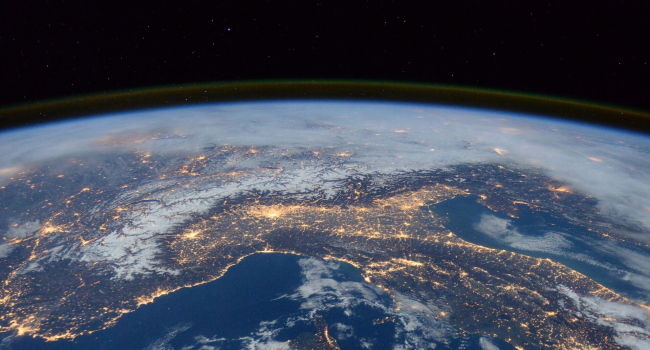
Researchers from the University of Vienna and the ETH Zurich have concluded that Earth’s rotation has been slowing at its fastest rate over the past 3.6 million years.
The study was published in the journal Earth and Planetary Science Letters.
How the rotation speed was measured
Scientists analyzed fossilized shells of single-celled marine organisms that lived on the ocean floor millions of years ago. By examining sediment patterns and past sea-level variations, they were able to reconstruct changes in the length of a day over geological time scales.
The results indicate that the current rate of slowdown is significantly higher than the long-term average over millions of years.
The main cause: melting ice sheets
The researchers link the accelerated slowdown to climate-driven changes. As polar ice sheets melt, vast amounts of water flow into the oceans and are redistributed closer to the equator.
This increases Earth’s moment of inertia. In simple terms, as mass shifts away from the poles, the planet resists rotation slightly more—similar to how a spinning figure skater slows down when extending their arms.
As a result, Earth’s rotation becomes marginally slower.
Context and implications
Although the change is extremely small—fractions of a millisecond per day—it is considered rapid on geological timescales. Over long periods, even tiny shifts in rotation can influence climate systems, ocean currents, and the length of a day.
For comparison, the average increase in the length of a day is about 1.7 milliseconds per century. However, researchers note that this process has noticeably accelerated in recent decades.
In short
Scientists from Austria and Switzerland report that Earth’s rotation is currently slowing faster than at any point in the past 3.6 million years. The main driver is the melting of polar ice sheets and the redistribution of water toward the equator, which increases the planet’s moment of inertia. The findings, based on ancient ocean sediment data, highlight how modern climate change can affect even fundamental properties of Earth itself.