make preferable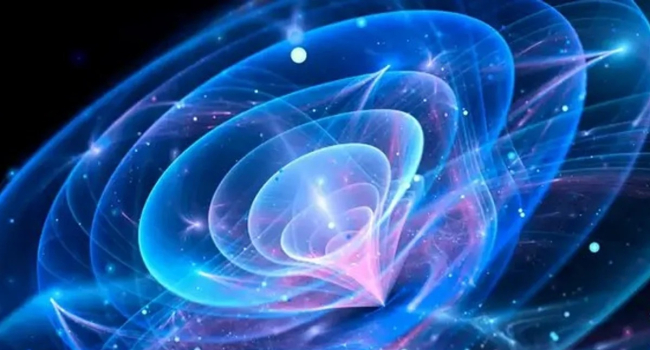
Chinese researchers have achieved a major breakthrough in quantum optics. For the first time, they have demonstrated that ordinary sunlight can be used to generate correlated (entangled) photon pairs — key building blocks for quantum communication, computing, and imaging. Previously, this required powerful, highly stable lasers. The study was published in the journal Advanced Photonics.
How the experiment worked
The main challenge was the instability of sunlight, which constantly changes in intensity, direction, and angle of incidence. To overcome this, researchers from Xiamen University, led by Wu Hong Zhang and Chen Lixiang, developed an automatic solar-tracking system similar to an astronomical mount.
Collected sunlight was guided through 20 meters of multimode optical fiber into a dark laboratory, where it reached a nonlinear crystal made of potassium titanyl phosphate. Inside the crystal, spontaneous parametric down-conversion occurred: a single photon was converted into a pair of strongly correlated photons.
Successful “ghost imaging”
The researchers then applied these photons to a technique known as ghost imaging. In this method, an image is reconstructed not through direct observation, but through correlations between entangled photon pairs.
The results were impressive:
- Image contrast reached 90.7%.
- For comparison, a similar laser-based setup (405 nm) achieved 95.5%.
The team successfully reconstructed both simple test patterns and a more complex two-dimensional image known as a “ghost face”.
Why this matters
The technology opens the possibility of building quantum systems that operate using natural sunlight instead of complex and energy-intensive laser setups. This could be especially useful for:
- Remote and hard-to-reach regions
- Space applications
- Passive systems that do not require external power sources
Future improvements are expected through better light-collection systems, new nonlinear crystals, and machine learning algorithms.
In brief
Chinese physicists have for the first time generated correlated quantum photon pairs using ordinary sunlight instead of lasers. With the help of an automatic tracking system and a nonlinear crystal, they successfully performed ghost imaging with a contrast of 90.7%. The breakthrough could significantly simplify quantum technologies and make them viable in field and space environments.