make preferable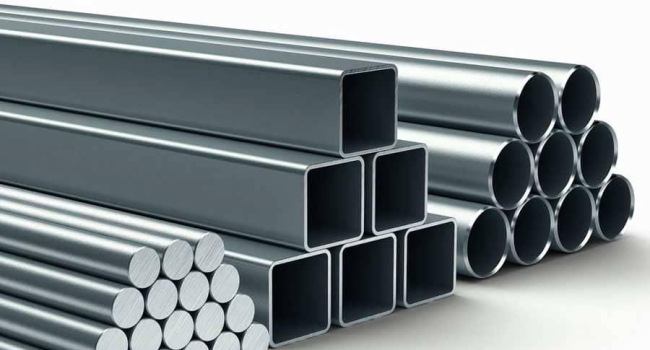
Researchers at The University of Hong Kong have developed a new type of stainless steel that could dramatically reduce the cost of producing green hydrogen from seawater.
The material, known as SS-H2, reportedly offers corrosion resistance approaching that of titanium while remaining far cheaper to manufacture. The study was published in Materials Today.
Why the Discovery Matters
Green hydrogen is produced through water electrolysis powered by renewable energy sources.
Seawater is considered an ideal resource because of its enormous availability, but there is a major engineering problem: salt and chloride ions rapidly corrode electrolysis equipment.
To withstand those harsh conditions, modern electrolyzers often rely on expensive titanium components coated with precious metals such as gold or platinum. Those materials significantly increase the overall cost of hydrogen production systems.
According to the researchers, replacing conventional materials with SS-H2 in a 10-megawatt electrolyzer system could reduce the cost of structural components by roughly 40 times.
How the New Steel Protects Itself
Traditional stainless steel resists corrosion thanks to a thin chromium oxide layer that forms on its surface.
However, during electrolysis — especially in seawater — the high electrical potentials involved can damage that protective layer, leaving the metal vulnerable to corrosion.
The Hong Kong team developed what they describe as a “sequential dual-passivation” approach.
In addition to the standard chromium-based protection, the steel forms a second protective layer based on manganese.
Lead author Kaiping Yu explained that the team was initially surprised by the results because manganese has traditionally been considered harmful to corrosion resistance. But after extensive atomic-scale experiments, the researchers concluded that the mechanism genuinely works.
Thanks to this dual-layer protection, the new steel reportedly withstands electrical potentials of up to 1700 millivolts even in aggressive seawater environments — enough for industrial electrolysis applications.
Potential Impact on Green Hydrogen
If the material performs similarly under large-scale industrial conditions, it could become a major breakthrough for the hydrogen industry.
Lower equipment costs are considered one of the key requirements for making green hydrogen economically competitive with fossil fuels.
By replacing expensive titanium-based systems with a far cheaper stainless steel alternative, the technology could help accelerate the expansion of hydrogen infrastructure worldwide.
Challenges Still Ahead
The researchers caution that SS-H2 is not yet ready for immediate mass deployment.
The next step will involve developing industrial-scale components such as electrode meshes, porous structures, and other parts required for commercial electrolyzers.
Still, project leader Mingxin Huang and his team believe the material could become a foundational technology for cheaper large-scale hydrogen production in the future.
In Brief
Scientists at the University of Hong Kong have developed a new stainless steel called SS-H2 that combines high corrosion resistance with relatively low cost.
Using a dual-passivation system based on chromium and manganese, the material can survive the harsh conditions involved in seawater electrolysis and may eventually replace expensive titanium components. Researchers believe the breakthrough could reduce electrolyzer costs by orders of magnitude and help make green hydrogen production far more affordable.