make preferable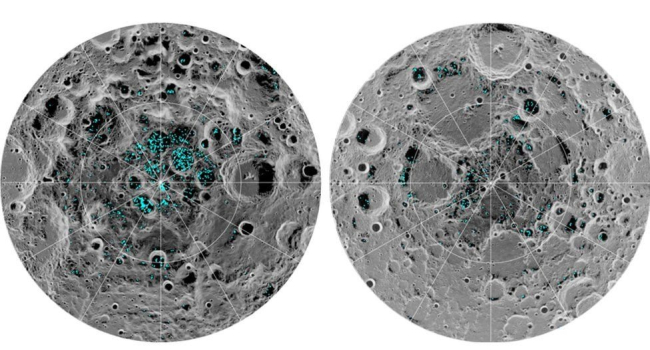
An international team of scientists has concluded that water on the Moon accumulated gradually over billions of years, rather than forming as the result of a single major event. The study was published in the journal Nature Astronomy.
Key Finding of the Study
The analysis showed that the oldest craters near the Moon’s south pole contain significantly more ice than younger ones. This indicates that the process of water accumulation continued almost continuously for 3–3.5 billion years.
Co-author Paul Hayne noted that the oldest craters appear to contain the most ice, suggesting a nearly continuous process.
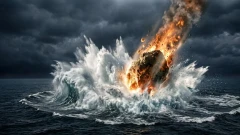
Scientists rejected the hypothesis that a large amount of water appeared all at once (for example, after the impact of a giant comet) and concluded that water reached the Moon from multiple sources over a very long period.
Where the Water Came From
Researchers consider three main mechanisms:
- Ancient volcanism — water could have been released from the Moon’s interior during eruptions billions of years ago;
- Comets and asteroids — impacts delivered water and ice;
- Solar wind — protons (hydrogen nuclei) from the solar wind interacted with oxygen in the lunar regolith, forming water molecules.
The resulting water migrated across the surface and eventually accumulated in so-called “cold traps” — craters that remain in permanent shadow and never receive sunlight. Temperatures in these regions can drop to −230 to −240 °C, allowing ice to persist for billions of years.
Why Ice Is Unevenly Distributed
Scientists found that the amount of ice strongly depends on the age and duration of shadowing of a crater. For example, the Haworth crater near the south pole, which has remained in shadow for more than 3 billion years, is considered one of the main potential reservoirs of lunar ice.
This uneven distribution explains why some craters contain large amounts of ice while nearby ones have almost none.
Why It Matters
Understanding the origin and distribution of water on the Moon is crucial not only for science but also for future crewed missions. Ice can be used as a source of drinking water, oxygen for breathing, and rocket fuel (by splitting water into hydrogen and oxygen).
Lead author Oded Aharonson emphasized that the question of the origin of lunar water can only be fully answered through direct исследования — either by analyzing samples on site or by returning them to Earth.
In Brief
Water on the Moon accumulated gradually over 3–3.5 billion years from multiple sources: volcanism, comets and asteroids, and interactions between the solar wind and lunar soil. Ice is preserved in permanently shadowed craters — “cold traps” — near the south pole. The oldest craters contain the most ice, confirming the long and continuous nature of the process. These findings are important for planning future lunar bases, where water could become a key resource for drinking, breathing, and fuel production. The study was published in Nature Astronomy.