make preferable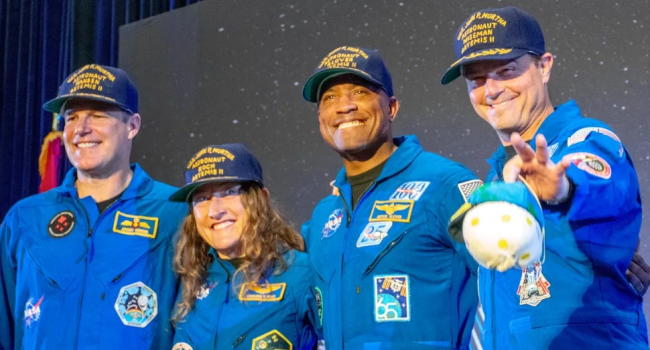
The crew of the Artemis 2 mission returned to Earth on Friday, and by Saturday they were already back home in Houston, reunited with their families and colleagues. The four astronauts who flew around the Moon for the first time in half a century attempted to reflect on their journey but admitted they had not yet fully processed what had happened to them, according to reports from Space.com.
Astronauts Reid Wiseman, Victor Glover, and Christina Koch, along with Jeremy Hansen from the Canadian Space Agency, landed on April 11 at Ellington Field Joint Reserve Base, according to official reports. After a short flight from San Diego — where the Orion spacecraft had splashed down the day before — helicopters touched down at the reserve base just a few kilometers from the Johnson Space Center.
Ten Days That Captured the World’s Attention
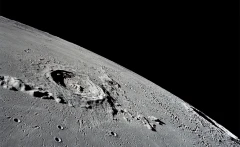
The Artemis 2 mission launched on April 1 aboard the heavy-lift Space Launch System (SLS). First, Orion entered Earth orbit and then set course for the Moon, completing a flyby. At the farthest point of the journey, on the Moon’s far side, the crew broke the record for the greatest distance traveled by humans from Earth — more than 200,000 miles (about 322,000 kilometers).
After ten days inside a tightly confined cabin comparable in volume to two minivans, the astronauts returned to their home planet. The world followed their journey through striking images and emotional live broadcasts. However, some of the most revealing reflections came only after landing, once the crew returned to Houston.
Reunion in the Hangar: Tears, Laughter, and Overwhelming Emotion
After a brief reunion with their families, the astronauts were brought onto a stage before a crowd of friends, colleagues, NASA staff, and journalists. NASA Administrator Jared Isaacman personally introduced the returning crew.
Commander Reid Wiseman spoke first, but only briefly, reportedly concerned that he might become overwhelmed with emotion. He indicated that he and his fellow astronauts — Victor Glover, Christina Koch, and Jeremy Hansen — were now bound together for life. He described the mission as the most special experience he expected to have in his lifetime.
Wiseman also reflected that before launch, traveling to the Moon had felt like the greatest dream imaginable on Earth. However, once he was 200,000 miles from home, his thoughts were focused primarily on returning safely to his loved ones. He added that being human — and being on planet Earth — carried a special meaning, noting that he had not yet fully understood what the crew had accomplished and felt hesitant even to begin processing its significance.
Victor Glover: An Experience Too Big for One Person
Pilot Victor Glover focused on gratitude. He explained that the difficulty lay not so much in describing the experience, but in containing the magnitude of what the crew had seen and felt. He suggested that being with his fellow crew members and witnessing their shared experiences felt too vast to be contained within a single person.
Christina Koch: Earth as a Shared Crew
Christina Koch, who previously held the record for the longest continuous spaceflight by a woman, offered a thoughtful distinction between the ideas of a “team” and a “crew.”
She explained that a team is simply a group of people working together to solve tasks, while a crew represents something deeper: a group that remains united under all circumstances, constantly moving in the same direction toward a shared purpose, silently sacrificing for one another, offering forgiveness, and sharing responsibilities. She described a crew as being inseparably connected through loyalty and shared needs.
Looking back at Earth from space, Koch said she had been struck not only by the beauty of the planet itself but also by the endless darkness surrounding it. She reflected that Earth had appeared like a lifeboat suspended peacefully in the vastness of the Universe. Although she acknowledged that she had not yet fully absorbed all the lessons from the journey, she concluded that humanity should see itself as one shared crew — addressing those words to all people on Earth.
Jeremy Hansen: Humor and Gratitude
Canadian astronaut Jeremy Hansen — the only crew member not from NASA — tried to lighten the atmosphere. While wiping away tears, he joked that the experience had been overwhelming and that the emotional gathering was not making it easier.
He then pointed to Reid Wiseman, who was standing at some distance, and remarked humorously that this was the farthest he had been from Wiseman in quite some time. In response, Wiseman crossed the stage and sat beside him, placing a hand on Hansen’s leg while he spoke — a gesture that drew smiles from the audience.
Hansen later turned to the technical and logistical aspects of the mission. He began by expressing gratitude to his family, NASA leadership, and the Canadian Space Agency. He suggested that people might never fully understand how thoroughly the crew had been supported and trained, describing the level of preparation as almost unbelievable.
In Brief
The Artemis 2 crew — Reid Wiseman, Victor Glover, Christina Koch, and Jeremy Hansen — completed a ten-day journey around the Moon, setting a record distance of more than 200,000 miles from Earth. This marked the first crewed lunar flyby since 1972.
After splashdown near San Diego, the astronauts were transported to Houston, where they were welcomed at Ellington Field by families, colleagues, and NASA leadership.
Wiseman described the mission as the most significant experience of his life and acknowledged that he had not yet fully grasped its scale. Christina Koch compared Earth to a lifeboat suspended in darkness and encouraged humanity to view itself as a single united crew.
Inside the Orion capsule — a space comparable to two minivans — the astronauts lived in extremely close quarters. Hansen joked that appearing on stage marked one of the first times in a while that the crew had stood a noticeable distance apart.
Technically, the mission demonstrated the readiness of the Orion spacecraft and the Space Launch System rocket for future lunar landings. For the astronauts themselves, however, the journey became a profound human experience — one that, by their own admission, was still too emotional to discuss without visible emotion.