make preferable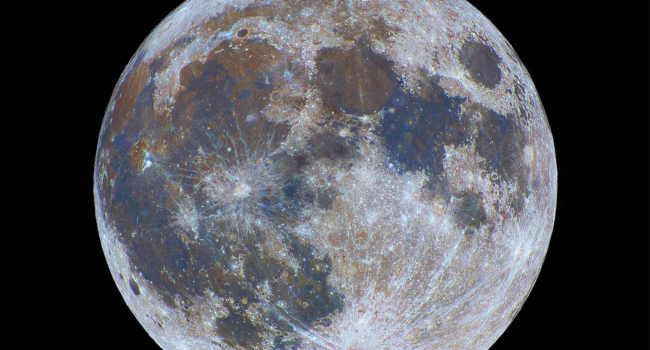
NASA is preparing to return astronauts to the Moon as part of the Artemis program. The first landing of the new generation — Artemis 4 — is scheduled for 2028 and is expected to take place near the south pole of the Moon. This naturally raises the question: will it be possible to see these historic landing sites from Earth through a telescope?
Why the South Pole Was Chosen
Unlike the Apollo program expeditions, which mostly landed in equatorial regions, Artemis missions are targeting the lunar south pole for several reasons. This region contains:
- Some of the oldest rocks on the Moon;
- Permanently shadowed craters that may contain water ice;
- Peaks of near-constant sunlight, suitable for placing solar panels and future bases.
NASA has already selected nine candidate landing sites — ranging from crater rims and plains to elevated areas such as the Malapert Massif. All of them are located very close to the south pole.
Are These Locations Visible from Earth?
The short answer: almost not.
The Moon is tidally locked to Earth, meaning the same side always faces us — a phenomenon known as tidal locking. However, because of the Moon’s slight axial tilt and elliptical orbit, it appears to “wobble” slightly — a motion called libration. Thanks to libration, we can see slightly more than 59% of the Moon’s surface, but the south pole lies right on the edge of the visible disk.
Even under the most favorable libration conditions, the future Artemis 4 landing sites are so far south that they remain at the very limit of visibility or are completely hidden behind the lunar limb. Clearly resolving them from Earth will not be possible.
How to Locate the South Polar Region in a Telescope
If you have a telescope with an aperture of 150 mm (6 inches) or larger, you can still try to glimpse the correct region. The best time is the week around the Full Moon, when nearly the entire visible side of the Moon is illuminated.
Step-by-step:
- Find the large and bright Tycho crater — it dominates the southern hemisphere of the Moon thanks to its bright ejecta rays.
- Move south from Tycho to locate the enormous ancient Clavius crater — one of the largest on the Moon (about 230 km in diameter).
- Even farther south, near the edge of the disk, lies the Moretus crater, notable for its central peak.
Just below and to the right of Moretus (as seen from Earth) lie the candidate landing zones for Artemis 4. Under favorable libration, it may be possible to glimpse the northernmost of them — for example, the Nobile crater or the Malapert Massif — but only barely, as faint hints of terrain.
During the Full Moon
Artemis 2 launched during a full Moon, when shadows are minimal and surface relief becomes harder to distinguish. In this case, you can orient yourself using two bright young craters:
- Copernicus — located about 10° above the lunar equator;
- Tycho — located in the southern hemisphere.
Draw an imaginary line from the western edge of Copernicus through the right side of Tycho — this line will point toward the Moon’s south pole.
In Brief
The future Artemis 4 landing sites lie near the Moon’s south pole — too close to the edge of the lunar disk to be clearly observed from Earth, even with powerful telescopes. Thanks to libration, under especially favorable viewing conditions it may be possible to barely glimpse the northernmost candidate zones (such as areas near the Nobile crater or the Malapert Massif). The best observation time is the week around the Full Moon. As humanity prepares to return to the Moon, the south pole remains one of the most difficult regions to observe from our planet.