make preferable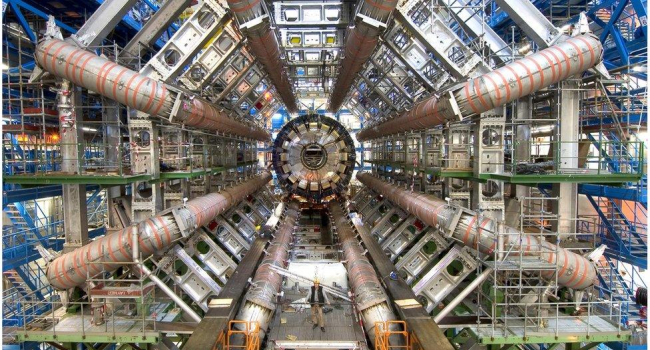
Scientists working at the Large Hadron Collider (LHC) have obtained the most detailed view to date of quark–gluon plasma — an extreme state of matter that existed in the Universe during the very first moments after the Big Bang, Space.com reports.
A Record-Breaking Look into the First Fractions of a Second of the Universe
In the ALICE experiment at the LHC, physicists collided iron nuclei at near-light speeds, recreating quark–gluon plasma — a hot, ultra-dense “soup” of free quarks and gluons that filled the Universe during the first microseconds of its existence.
The key discovery is that a characteristic particle “flow,” previously observed only in collisions of heavy nuclei (such as lead), has now been reliably detected in much lighter collisions — between protons, as well as between protons and lead nuclei.
David Dobrigkeit Chinellato stated that this was the first time researchers had observed this characteristic flow pattern across a wide range of momenta and for several particle types in a subset of proton–proton collisions that produce an unusually large number of particles.
What Is Anisotropic Flow
One of the key indicators of the formation of quark–gluon plasma is anisotropic flow — a phenomenon in which particles do not scatter evenly in all directions from the collision zone, but instead move preferentially in specific directions.
Scientists found that at intermediate speeds, the strength of this flow depends on how many quarks make up a particle:
- Baryons (which consist of three quarks) exhibit a stronger flow;
- Mesons (which consist of two quarks) show a weaker flow.
This effect is explained by the process of quark coalescence — the merging of quarks into particles. The more quarks combine into a single particle, the more strongly it picks up the collective motion of the plasma.
An Important Breakthrough
Previously, scientists believed that extremely powerful heavy-ion collisions were required to create quark–gluon plasma. New data from ALICE show that even in relatively “light” proton–proton and proton–lead collisions, if a large number of particles are produced, a system forms that behaves like an expanding quark–gluon plasma.
Chinellato emphasized that the results support the hypothesis that an expanding system of quarks exists even when the size of the collision system is small.
Models that take quark coalescence into account successfully describe the observed flow, while models that ignore this process fail to reproduce the results.
What Comes Next
Despite significant progress, small discrepancies between theory and experiment remain. Scientists hope to resolve these differences using new data. In 2025, collisions involving oxygen nuclei — an intermediate case between protons and heavy lead nuclei — were already carried out at the LHC.
Kai Schweda stated that researchers expect the oxygen collision data recorded in 2025, which bridge the gap between proton and lead collisions, to provide new insights into the nature and evolution of quark–gluon plasma across different collision systems.
In Brief
The Large Hadron Collider, through the ALICE experiment, has shown for the first time that the characteristic collective particle flow associated with quark–gluon plasma — the state of matter that existed immediately after the Big Bang — can occur even in relatively small proton–proton and proton–lead collisions. This means that conditions similar to those of the early Universe can be created at lower energies and in smaller systems than previously thought. The new findings bring scientists significantly closer to understanding the physics of the Universe’s earliest moments. The study was published on March 20 in the journal Nature Communications.