make preferable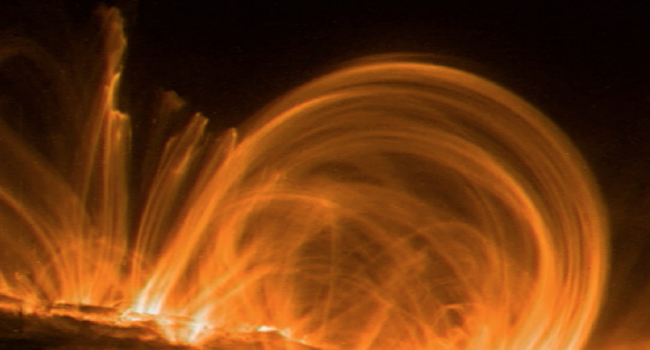
A coronal hole has formed on the Sun that, according to forecasts, will begin affecting Earth’s magnetosphere around midday on April 10, 2026. This was reported by specialists from the Laboratory of Solar Astronomy of the Space Research Institute of the Russian Academy of Sciences (IKI RAS) and the Institute of Solar-Terrestrial Physics of the Siberian Branch of the Russian Academy of Sciences.
What Is a Coronal Hole
A coronal hole is a region in the solar corona with reduced temperature and plasma density. Through such “holes,” the solar wind escapes into space at increased speed. When this stream reaches Earth, it can cause disturbances in the geomagnetic field — magnetic storms.
According to preliminary data, the effect of the current coronal hole is expected to be fairly weak and short-lived. Scientists anticipate only minor geomagnetic disturbances that will quickly subside.
Current Situation on the Sun
At present, space weather remains calm. Over the past 24 hours, several weak solar flares have been recorded, but they did not develop further. Background solar activity continues to decline and has already returned to levels last observed in 2022.
A Reminder of a Recent Powerful Storm
For comparison, at the end of March 2026, Earth experienced one of the strongest magnetic storms of the past decade — at the G3 level. It fell only slightly short of the highest G5 level. The cause was a major solar flare during which a stream of plasma and a medium-sized prominence were ejected toward Earth, significantly increasing the mass of the expelled material.
What to Expect on April 10
According to the forecast from IKI RAS, the influence of the coronal hole will begin around midday on April 10. Specialists emphasize that if a storm does occur, it will be weak and should not cause serious problems.
However, weather-sensitive individuals may experience mild discomfort, and enthusiasts who observe auroras should keep their cameras ready — under favorable conditions, faint auroral activity may be visible at high latitudes.
In Brief
The coronal hole on the Sun that formed in early April will begin affecting Earth during the daytime on April 10. Scientists from IKI RAS and the Institute of Solar-Terrestrial Physics predict weak geomagnetic disturbances that will subside quickly. Unlike the powerful G3-level magnetic storm at the end of March, the current event is expected to be minor. Solar activity continues to decline and has already reached levels last seen in 2022.