make preferable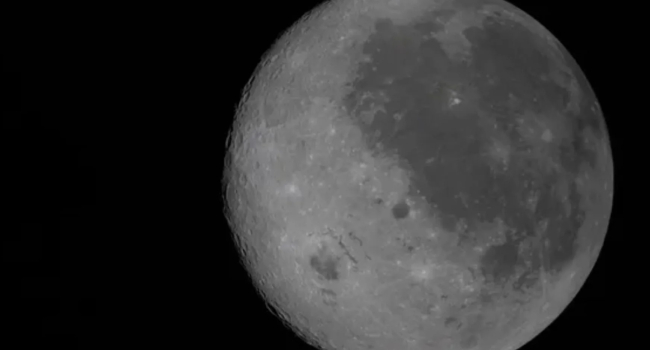
Four astronauts aboard the Orion spacecraft have completed their flyby of the Moon and set course for Earth. During this mission, they traveled farther than any humans in history, saw the far side of the Moon with their own eyes for the first time in half a century, and received a video greeting from Jim Lovell — the legendary commander of Apollo 13, whose record they have just surpassed.
On the night of Tuesday, April 7, 2026, the Orion spacecraft with four astronauts on board completed a lunar flyby that lasted nearly seven hours. The main engineering task of this stage was purely technical — to test all spacecraft systems in real deep-space conditions, conduct imaging and study of the lunar surface, and at the same time verify how the Moon’s gravity would accelerate the capsule for its return journey to Earth. But it was during these hours that the Artemis II mission permanently wrote its name into the history of crewed spaceflight.
Absolute Distance: How the Apollo 13 Record Fell
First, the Artemis II crew matched the achievement of their predecessors — and then surpassed it. The first major milestone was reached on April 6, when Orion moved 400,171 kilometers away from Earth. That was exactly the same distance reached in 1970 by the astronauts of the ill-fated Apollo 13 — a distance achieved after an onboard accident turned a planned lunar landing into a dramatic flyby and race for survival.
About five hours later, deep into the night Kyiv time (at 19:07 EDT), Orion reached the maximum point of its trajectory — 406,771 kilometers from Earth. No human in history had ever traveled that far from their home planet. At its closest point to the Moon, the capsule was about 6,500 kilometers from its surface, and as planned, communication with the spacecraft was interrupted for nearly 40 minutes while it passed behind the far side of the Moon.
A Farewell “Welcome” from Jim Lovell
Several months before his death (Jim Lovell passed away in August 2025), the commander of Apollo 13 recorded a short video message. He knew his record would fall and wanted to personally welcome those destined to break it. Mission Control transmitted this message to Orion at the very moment the spacecraft began its flyby of the Moon.
In his message, Lovell greeted the Artemis II crew and said that he was speaking as an Apollo astronaut, welcoming them to what he called his old neighborhood.
Lovell also recalled the Apollo 8 mission, during which humanity first saw the Moon from close range, and the crew read the opening verses from the Book of Genesis on Christmas, addressing the entire Earth.
He recalled that when Frank Borman, Bill Anders, and he flew around the Moon on Apollo 8, they obtained the first close-up views of the Moon in human history and saw the entire Earth at once — a sight that inspired and united people around the world. He added that he was proud to pass the torch to the new crew as they circled the Moon and laid the foundation for future missions to Mars for the benefit of humanity. Lovell emphasized that the day was historic, acknowledged that the astronauts would be very busy, but urged them not to forget to enjoy the view. He also wished good luck and safe travels to Reid, Victor, Christina, Jeremy, and all the teams supporting them, sending greetings from what he referred to as “good Earth.”
This reference to “good Earth” echoed the famous Christmas message of Apollo 8, when Borman ended the Bible reading with a blessing addressed to everyone on Earth.
Artemis II commander Reid Wiseman, after receiving the message, responded from aboard by saying that the message from Jim Lovell was amazing, that it was great to hear him welcome them to the neighborhood, and that it was going to be a great day.
“May This Record Not Last Long”
When Orion officially surpassed the Apollo 13 achievement, Canadian astronaut Jeremy Hansen addressed the crew and mission teams. His remarks became one of the most powerful moments of the mission — not simply a report, but a reflection on the purpose of human space exploration.
He stated that surpassing the maximum distance ever traveled from Earth by a human was done in honor of the extraordinary efforts and achievements of their predecessors in crewed space exploration. He said they would continue their journey farther into space before, as he phrased it, Mother Earth would eventually return them to everything they held dear. Most importantly, he used the moment to challenge both the current and future generations to ensure that this new record would not stand for long.
What Comes Next and Who Is Flying
Orion has now completed its lunar observation phase and, using the Moon’s gravitational slingshot, is accelerating back toward Earth. As officially reported by NASA, the astronauts’ return is expected on Saturday morning: the capsule will splash down off the coast of San Diego. If everything goes according to plan, by the end of 2028 the Artemis IV mission will land humans on the Moon’s surface (after Artemis III completes docking and technology tests in low Earth orbit), and in the early 2030s construction of a permanent base near the Moon’s south pole will begin.
The Artemis II crew itself is historic in many ways:
- Reid Wiseman — commander;
• Victor Glover — pilot, the first Black astronaut to travel beyond low Earth orbit;
• Christina Koch — mission specialist, the first woman in history to travel this far from Earth;
• Jeremy Hansen — mission specialist representing the Canadian Space Agency (CSA), the first non-American to reach such distant space.
They were the ones who saw what no human had seen since 1972: the far side of the Moon with the naked eye, as well as a solar eclipse that at that moment was invisible from Earth. Among other things, the astronauts noticed an unusual detail on the Moon’s surface — a geological feature that had not been recorded by Apollo crews or modern robotic probes. NASA has not yet disclosed details, promising a preliminary report in the coming days.
In Brief
The Artemis II mission is the first crewed lunar flyby in 54 years. Four astronauts set an absolute human distance record in space: 406,771 kilometers from Earth. The previous achievement (400,171 km) belonged to the emergency crew of Apollo 13 and stood for 56 years. Before his death, Apollo 13 commander Jim Lovell recorded a greeting for them, and Canadian astronaut Jeremy Hansen urged future generations to surpass their new record as soon as possible. The spacecraft is now returning to Earth, with splashdown expected on Saturday, April 10, off the coast of San Diego. The crew includes the first Black astronaut beyond low Earth orbit, the first woman, and the first non-American to travel such a distance from home.