make preferable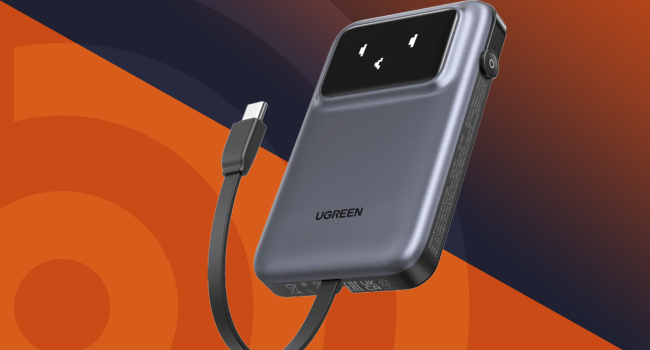
A power bank has become one of the most essential gadgets in any traveler’s bag. However, not every external battery can be safely brought on board an aircraft. Choosing the wrong one may result in confiscation at the airport—or, in the worst case, safety issues. Here is a clear explanation of the rules that apply in 2026 and how to avoid losing your charger while traveling abroad.
Why Power Banks Are Strictly Regulated
Most modern portable batteries use lithium-ion cells. These batteries are compact, powerful, and generally safe under normal conditions. However, if they are damaged, overheated, or exposed to sudden pressure changes, they can catch fire or even explode. The larger the battery capacity and energy density, the greater the potential danger.
Because of this risk, strict rules apply worldwide to transporting lithium batteries by air. Some countries—especially China, which handles a large volume of transit flights—have introduced particularly strict regulations.
Never in Checked Luggage—Carry-On Only
The most important rule to remember is simple: power banks of any size are not allowed in checked baggage. They must be carried only in hand luggage.
The reason is practical. If a device overheats or ignites in the cabin, the crew can react quickly and extinguish the fire. If it happens in the cargo hold, the fire could spread to other baggage and create a serious hazard for the entire aircraft.
What Power Banks Are Allowed on Airplanes
Restrictions depend on battery capacity. Capacity is measured in two units:
- mAh (milliamp-hours) — usually printed on the device
- Wh (watt-hours) — the unit used in airline regulations
Here are the general limits used worldwide:
- Up to 100 Wh — allowed without special permission (if clearly labeled and certified)
- 100–160 Wh — allowed only with airline approval, and usually limited to two units per passenger
- Over 160 Wh — completely prohibited on passenger aircraft
For most travelers, this means that 10,000 mAh and 20,000 mAh power banks are usually allowed without problems. Larger models—around 30,000–40,000 mAh or more—may fall into restricted or prohibited categories depending on their voltage.
How to Calculate Capacity in Watt-Hours
If your power bank shows only mAh, you can convert it to Wh using a simple formula:
Capacity (Wh) = Capacity (mAh) ÷ 1000 × Voltage (V)
Most power banks operate at 3.6 V or 3.7 V.
Example:
10,000 mAh × 3.6 V ÷ 1000 = 36 Wh
This battery is safely within the allowed range.
Important Update: New Rules in China
In recent years, China has tightened its requirements significantly. For flights operated by Chinese airlines—or for transit through Chinese airports—all power banks must have a CCC certification (China Compulsory Certificate).
This certification appears as “CCC” inside an oval printed on the device.
Many power banks manufactured before 2024 do not have this certification. If you are flying to China or transferring through a Chinese airport, older devices may be confiscated—even if they previously traveled without issues. In such cases, travelers may be forced to buy a new compliant model.
Useful Tips Before Your Flight
- Always check the device label—capacity must be clearly printed.
- If flying through China, make sure the CCC mark is present.
- If your battery is close to 100 Wh, check your airline’s specific rules in advance.
- Choose well-known brands with clear labeling and up-to-date certifications.
In Brief
Power banks must be carried in hand luggage only—they are strictly forbidden in checked baggage. Batteries up to 100 Wh are generally allowed without special permission, 100–160 Wh require airline approval, and above 160 Wh are banned entirely. When flying through China, a CCC certificate is mandatory, and many older models lack it.
To avoid problems at the airport, choose clearly labeled devices and check your airline’s rules in advance. In most cases, standard 10,000–20,000 mAh power banks can be carried without issues.