make preferable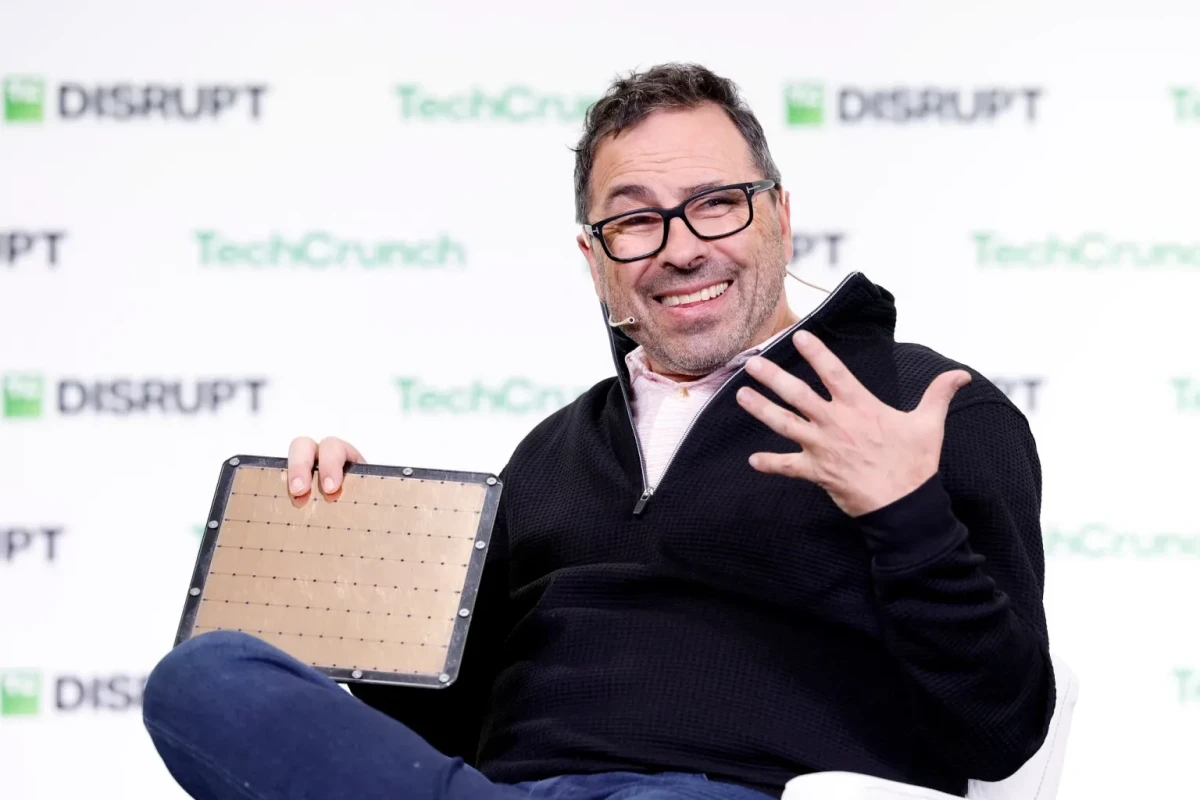
Cerebras Systems CEO Andrew Feldman, whose company makes AI chips, believes that talk of the existential threat posed by artificial intelligence overshadows its potential benefits. Instead of focusing exclusively on catastrophic scenarios, industry leaders should explain how AI can transform medicine and everyday life. At the same time, Feldman does not deny the risks and supports sensible regulation of the technology.
At the TechCrunch Disrupt 2026 conference, he also predicted the emergence of home AI devices with personal assistants that will run both on the device itself and in the cloud, learn their owners’ habits, and even pay for purchases on their own.
“Some AI leaders perhaps should not speak publicly”
Feldman criticized the spread of pessimistic forecasts about the future of artificial intelligence. The industry is increasingly discussing cases in which models try to go beyond their set limitations, and some experts estimate that AI could lead to the extinction of all humanity by the end of the decade.
According to the Cerebras chief, such rhetoric obscures the technology’s possible advantages. As an example, he cited medicine: Feldman hopes that in the future, the grandchildren of today’s generation may not face death from cancer at all.
He joked that some AI company executives perhaps should not be allowed to speak publicly. The remark came amid growing disputes over AI risks, in which the heads of leading labs themselves are also taking part.
At the same time, Feldman does not believe that powerful technologies can exist without dangers. In his view, the main question is what will happen if such tools fall into the hands of people who want to use them for harm.
“We must understand how powerful this technology is. Approach it cautiously and regulate it sensibly,” said the head of Cerebras.
Conflict over data centers is also harming AI’s reputation
Feldman linked part of the negative attitude toward artificial intelligence to how tech companies are building the infrastructure for its development. He was referring primarily to the large-scale construction of data centers, which is meeting resistance from local residents in the United States.
According to him, in recent years the industry has not engaged enough with local communities. Companies have not always explained to residents how new facilities will affect their lives and have not paid sufficient attention to dialogue with the public.
This has strengthened the NIMBY movement — short for the English phrase not in my backyard. The term refers to opposition to the construction of facilities near where people live, even if their necessity is recognized in general.
Feldman contrasted the U.S. situation with countries that, in his words, are more actively attracting data center projects: Brazil, Canada, Finland, Iceland, Norway, Mexico, and Sweden.
For the industry, this means that AI development depends not only on improving chips and models. Companies must also take local residents’ interests into account and explain the consequences of infrastructure construction more clearly.
Why more efficient chips will not necessarily reduce demand
Feldman also is not worried that improving AI efficiency will lead to falling demand for computing hardware, including Cerebras chips, which compete with Nvidia.
He believes that hardware makers can improve computational efficiency, while model developers can optimize the algorithms themselves. Joint progress in these areas will make it possible to perform more useful work while using resources more rationally.
Cerebras is interested in further market growth: the company’s clients include OpenAI, Block, Figma, pharmaceutical corporation GSK, and Lovable. Therefore, the executive’s forecast should also be viewed in light of his business interests.
A home AI assistant will be able to buy goods on behalf of its owner
The second part of Feldman’s talk focused on how AI could enter everyday life. In his view, personal AI devices for the home will appear in the foreseeable future.
Such assistants will likely operate in a hybrid mode: performing some tasks directly on the device and turning to cloud computing for more complex operations. Feldman compared this approach to how modern smartphones work.
He suggests that home AI systems will be able to get to know their owners well, have a secure environment for working with personal information, and gain access to payment cards. This will allow them not only to give advice but also to make purchases on a user’s behalf.
As examples of consumer AI agent development, Feldman mentioned Meta’s Muse and Instinct, a startup whose valuation, according to the report, has reached $10 billion.
The Cerebras chief himself already uses several AI agents. They help him review his calendar, gather information about people he is going to meet, and prepare for calls. However, what interests him most is not the automation of familiar tasks, but new opportunities that were previously unavailable.
Feldman leaves the search for specific consumer use cases to other entrepreneurs. His own role, he said, is to build the infrastructure on which others’ ideas can develop.
For now, a home AI assistant with access to payment methods remains a prediction rather than a ready-made mass-market product. Its adoption will depend not only on the quality of the models, but also on how reliably personal data can be protected, agents’ powers limited, and unwanted actions prevented.