make preferable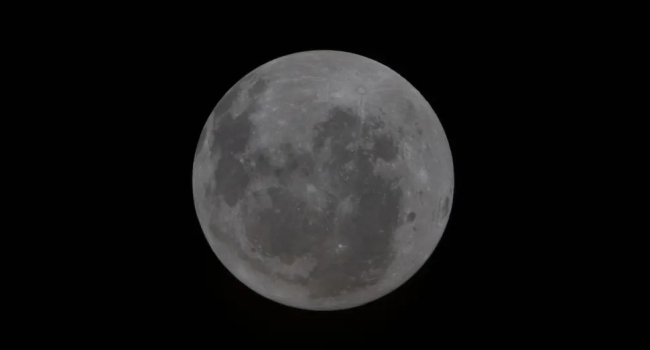
The crew of Artemis II, currently on course for the first crewed lunar flyby in more than half a century, has seen the Moon up close for the first time.
Late in the evening on April 4, 2026—just two days before the historic flyby—the astronauts aboard the Orion spacecraft switched off the cabin lights to get a better look at the approaching Moon. What they saw, they reported, looked dramatically different from the familiar view seen from Earth.
Christina Koch, the first woman to travel toward the Moon, described the view as phenomenal and explained over radio that the Moon they were seeing looked completely different from the one visible from Earth.
Mission commander Reid Wiseman, a veteran astronaut from the International Space Station and a U.S. Navy test pilot, also expressed amazement. He reported that he was not usually prone to exaggeration, but that the experience felt like everything they had practiced for—only now in three dimensions and far more impressive than expected.
Mission Control in Houston responded briefly, acknowledging the excitement and referring to it as “lunar joy.”
What Exactly the Astronauts Saw
The crew gave detailed descriptions of lunar craters, vast basalt plains known as maria, variations in brightness, and other geological features. Using a 400-millimeter camera lens, Wiseman reported being able to clearly distinguish prominent craters such as Tycho crater, Copernicus crater, and Reiner crater.
One of the most striking features was the Orientale Basin—a massive impact structure on the Moon’s far side that had just begun to enter their field of view. Wiseman reported that the basin was visible even to the naked eye because the Moon appeared extremely bright. He also noted that features such as Aristarchus crater and Copernicus were especially clear.
Koch focused on observing the lunar terminator—the sharp dividing line between the illuminated and shadowed portions of the Moon. She explained that at first it appeared almost like a full Moon because the terminator was difficult to detect, but once visible, the topography along the boundary became strikingly detailed.
Why These Observations Matter
For the scientific team supporting Artemis II, the astronauts’ observations were extremely valuable. Jennifer Hellmann from NASA Ames Research Center expressed enthusiasm about the quality of the crew’s descriptions. She noted that the excitement in their voices reflected genuine awe and that their detailed observations confirmed how well trained they were in lunar geography and science.
The human eye can detect subtle color variations and fine details that are sometimes missed by automated spacecraft cameras. This makes crew observations particularly valuable for understanding lunar geology, especially in regions on the far side that have previously been seen only by robotic probes.
What Comes Next
Artemis II continues its 10-day mission. The main event—a seven-hour lunar flyby—is scheduled for Monday, April 6, beginning at approximately 1:30 p.m. Eastern Time (20:30 Moscow time). After completing the maneuver, the Orion spacecraft will begin its journey back to Earth, with splashdown planned for April 10 in the Pacific Ocean off the coast of San Diego.
In Brief
The Artemis II astronauts have seen the Moon from close range for the first time and reacted with unmistakable excitement. Christina Koch reported that the Moon they were observing looked completely different from the one seen from Earth. The crew carefully described craters, maria, the Orientale Basin, and the lunar terminator after dimming cabin lights to improve visibility.
These observations are scientifically important because the human eye can detect nuances that cameras sometimes miss. The sense of “lunar joy” aboard Orion confirms that humanity’s return to the Moon after a 53-year gap is already reshaping how we see our nearest cosmic neighbor.