make preferable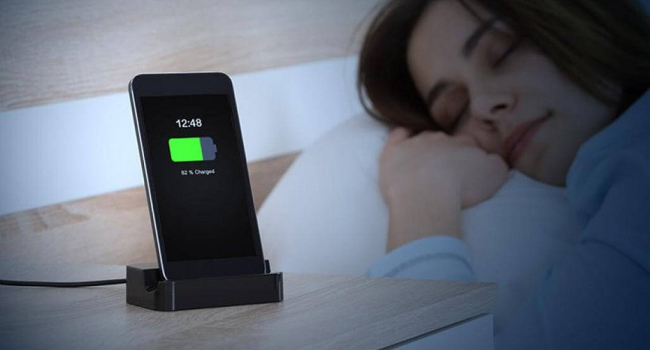
Many of us plug in our smartphones before going to bed and leave them charging until morning. It’s convenient — but does this habit actually shorten battery life?
Georgy Tsereteli, Head of New Product Development at Ippon, explained in an interview with Gazeta.Ru when overnight charging truly accelerates battery degradation — and when it’s just a myth.
How Modern Charging Works
Lithium-ion batteries in smartphones have long been protected against overcharging. Once the battery reaches 100%, the controller reduces the current to a minimum and switches to maintenance mode. The phone only receives tiny amounts of power to compensate for natural self-discharge.
In the traditional sense, it’s impossible to “overcharge” a modern smartphone battery. Protective electronics and smart charging controllers simply do not allow excessive current to flow.
So overnight charging itself isn’t the main problem. What really matters are the conditions under which it happens.
When Batteries Actually Age Faster
According to the expert, several factors can accelerate battery wear during overnight charging:
1. High Temperature — the Main Enemy
Heat is the most dangerous factor for lithium-ion batteries.
If your phone is under a pillow, inside a thick case, near a heater, or simply in a warm bed, it can overheat. Prolonged exposure to high temperatures (above 35–40°C / 95–104°F) while sitting at 100% charge significantly accelerates chemical degradation inside the battery.
Heat combined with full charge is especially harmful.
2. Staying at 100% for Too Long
Even without overheating, keeping a battery at maximum voltage for extended periods isn’t ideal.
Many modern smartphones include optimized charging features:
- Optimized Battery Charging on iPhone
- Adaptive Charging on Android devices
These systems typically charge the phone to 80–90%, pause, and then complete charging shortly before your usual wake-up time.
If your phone supports this feature, it’s worth enabling.
Myths vs. Real Risks
The myth that a battery can be “charged beyond its limits” has long been debunked. However, other risks remain:
Cheap or Damaged Chargers
Low-quality or worn-out charging adapters and cables may supply unstable voltage, cause local overheating, or even damage the phone’s power controller.
Power Surges and Grid Instability
In older buildings or during low-demand nighttime hours, power grids can experience voltage spikes, dips, or electrical noise. While smartphone chargers are designed to handle fluctuations, unstable electricity increases stress on both the charger and the battery over time.
How to Charge Your Phone Safely Overnight
The expert offers simple but effective recommendations:
- Don’t leave your phone under a pillow, in a thick case, or near heat sources.
- Enable optimized charging features if available.
- Use certified, high-quality chargers and cables.
- For extra protection, plug your charger into a surge protector or uninterruptible power supply (especially in homes with older wiring).
If your phone becomes noticeably hot while charging, that’s already a warning sign. You should check your charging accessories — or possibly the battery itself.
In Brief
Overnight charging does not inherently damage your battery — modern smartphones are protected against overcharging.
However, battery wear accelerates if:
- The phone overheats
- It stays at 100% charge for long periods
- You use poor-quality accessories
- Your power supply is unstable
Enable optimized charging, avoid overheating, and use reliable equipment — these steps genuinely help extend your battery’s lifespan.