make preferable
Battery life remains one of the key criteria when choosing a smartphone. Today we constantly shoot videos, scroll through social media, and often forget to charge our phones — making a full day away from an outlet a necessity rather than a luxury. The CNET editorial team conducted large-scale testing of 35 models from 2025–2026 to determine which devices truly lead in battery performance.
Leaders in Battery Life: Apple and OnePlus
Based on the results of all tests, Apple ranked first among brands, slightly ahead of OnePlus. Both manufacturers dominated the top five individual models. Motorola and Samsung took third and fourth places with only a minimal gap between them, while Google came in fifth.
Apple traditionally wins thanks to the tight optimization between its hardware and iOS, while OnePlus benefits from massive batteries and new technologies. Interestingly, Oppo (OnePlus’s parent company) also delivered excellent results with the Find X9 Pro and the foldable Find N5, but these devices were not included in the overall brand ranking due to the small number of tested units and limited availability in the U.S.
Top 5 Smartphones by Battery Life
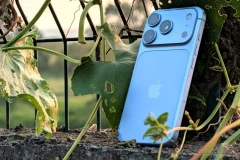
The overall champion is the iPhone 17 Pro Max (starting at $1,199). Despite a relatively “modest” 5088 mAh battery, it demonstrated the best endurance among all 35 devices. The efficiency of the A19 Pro chip combined with iOS 26 works wonders — the phone easily lasts through a full day of intensive use with power to spare.
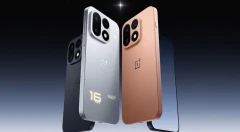
Second place is shared by the iPhone 17 (from $829) and the OnePlus 15 (from $900). The base iPhone, with a battery of just 3692 mAh, outperformed competitors with much larger batteries — a clear example that capacity is not everything; optimization matters more.
Third place in the top five is also shared by several models: the Motorola Moto G Stylus (2025) for $400, Motorola Edge (2025) for $500, OnePlus 13R for $600, and OnePlus 15R for $700. The most affordable option, the Moto G Stylus, combines a large battery, an energy-efficient display, and a modest (but sufficient) processor.
Only two smartphones in the top five cost more than $1,000, and nearly half of the leaders use silicon-carbon batteries, which allow for greater capacity without increasing device size.
Particularly impressive is the OnePlus 15 with its massive 7300 mAh battery — one of the largest among flagship phones sold in the United States.
2026 — A Turning Point for Batteries
Over the past year, manufacturers have actively adopted silicon-carbon batteries. This technology makes it possible to pack more energy into the same physical space, which is crucial for slim devices. OnePlus, Poco, and several other brands are already using it extensively.
A comparison between 2025 and 2024 showed that average battery life increased by just 0.78%. The difference is minimal — if you are choosing between last year’s model and a new release, it may be wiser to buy the cheaper one.
Advice from CNET
If your current phone still satisfies you overall but the battery drains faster than it used to, consider replacing the battery. It is cheaper than buying a new device and can extend your gadget’s lifespan by two to three years.
And if you are purchasing a new phone, look beyond the mAh rating — pay attention to software optimization, the chipset, and real-world test results. In 2026, a full day without recharging is already the standard, while two days is a reality for leaders such as the OnePlus 15 or the iPhone 17 Pro Max.
In Brief
CNET tested 35 smartphones and found that Apple — especially the iPhone 17 Pro Max — and OnePlus, with models like the 7300 mAh OnePlus 15, lead in battery life. The top five also includes the iPhone 17, Motorola Moto G Stylus, and others. Nearly half of the best performers use silicon-carbon batteries. Battery life gains in 2025–2026 have been minimal, highlighting the importance of optimization over sheer capacity. If your battery drains quickly, consider replacing it instead of buying a new phone․