make preferable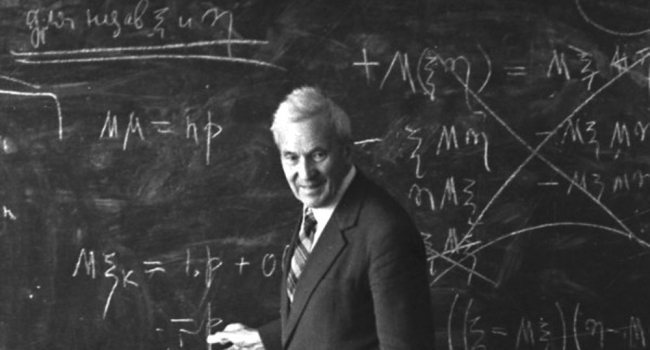
An international team of scientists from Helmholtz-Zentrum Dresden-Rossendorf (Germany), Johns Hopkins University, and Duke University (USA) has confirmed that the turbulence theory developed by the prominent Russian mathematician Andrey Kolmogorov in 1941 applies to flows generated by rising bubbles in liquid. The study, published on June 20, 2025, in Physical Review Letters (DOI: 10.1103/v9mh-7pw1), provides the first experimental evidence that Kolmogorov scaling (K41) can be applied to bubble-induced turbulence.
Bubble Turbulence: From Soda to the Ocean
Bubble-induced turbulence is widespread: in carbonated drinks, industrial mixers, chemical reactors, wastewater treatment systems, and even ocean waves. When large numbers of bubbles rise through a liquid, their wakes create complex swirling flows that mix the medium. Until now, it was unclear whether Kolmogorov’s classical theory, which describes the energy cascade in turbulent flows, could be applied to such systems, since experiments and simulations had produced contradictory results.
In 1941, Kolmogorov proposed that in turbulent flows with high Reynolds numbers, energy is transferred from large vortices to increasingly smaller ones until it dissipates due to viscosity. His theory, known as K41 scaling, became the foundation for describing turbulence in fluids. But its applicability to bubbly flows remained in question.
The Experiment: 3D Tracking of Bubbles
To test the theory, scientists conducted experiments using advanced 3D Lagrangian tracking technology. In a vertical column 11.5 cm wide, controlled flows of bubbles 3–5 mm in diameter were generated. The motion of bubbles and water particles was recorded with four high-speed cameras operating at 2,500 frames per second. This enabled precise tracking of the small-scale fluid dynamics in the “bubble swarm.”
The researchers tested four scenarios by varying bubble size and density. In two cases—moderate bubble sizes (3–5 mm) with moderate density—small-scale turbulence (smaller than the bubble size) matched Kolmogorov’s predictions. Energy was transferred from large vortices to small ones until dissipated by viscosity. This is the first experimental confirmation of K41 in bubble flows.
“Kolmogorov’s theory is elegant. It describes how energy cascades from large vortices to smaller ones until it dissipates through viscous effects, governing the fluctuations of turbulent fluid motion,” noted co-author Dr. Andrew Bragg of Duke University.
New Formula and Theory Limitations
The scientists also developed a new mathematical formula for estimating the rate of turbulence decay (energy dissipation), which depends only on bubble size and density. The formula showed excellent agreement with experimental data, making it useful for modeling bubbly flows in real-world systems such as chemical reactors or climate models.
However, the study revealed a limitation: to observe a “pure” Kolmogorov inertial range—where K41 scaling works perfectly—the bubbles must be much larger. In reality, such large bubbles are unstable and tend to break apart, placing a fundamental limit on the theory’s applicability. “Nature doesn’t allow us to achieve perfect Kolmogorov turbulence in bubbly flows, but under the right conditions, we come close,” explained Dr. Hendrik Hessenkemper, who conducted the experiments.
Significance of the Discovery
Confirming Kolmogorov’s theory in bubbly flows has important practical and scientific implications:
- Industrial applications: Understanding turbulence in bubble flows will improve the design of chemical reactors, water treatment systems, and other technologies involving gas-liquid mixtures.
- Climate models: Bubble-induced turbulence plays a role in ocean processes that influence climate, and accurate modeling will improve forecasts.
- Fundamental physics: The study adds bubbly flows to the list of systems where Kolmogorov’s theory, developed more than 80 years ago, remains relevant.
The authors note that this is only the beginning. Future research will examine the effects of complex bubble shapes, mixtures, or varying conditions (such as gravity or fluid properties). “The better we understand the fundamental rules of turbulence in bubbly flows, the more effectively we can use them in real-world applications,” concluded Dr. Tian Ma, the study’s lead author.
In Short…
The international research team has confirmed that Andrey Kolmogorov’s 1941 turbulence theory applies to bubble-induced flows under certain conditions (3–5 mm bubbles with moderate density). 3D tracking experiments showed for the first time that energy in such flows cascades according to K41, while a new formula for turbulence decay rate simplifies modeling. This discovery not only confirms Kolmogorov’s genius but also opens new possibilities for engineering and climate applications, highlighting the remarkable universality of his theory.