make preferable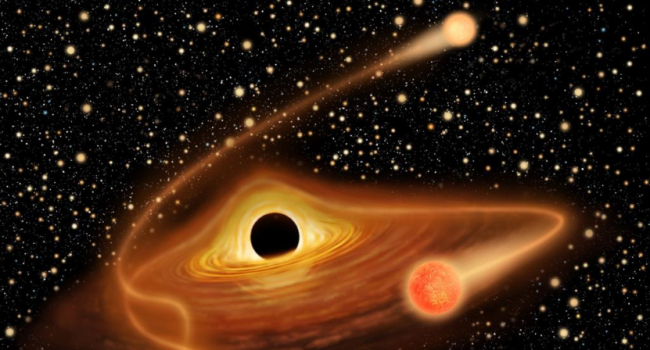
Astronomers from the Chinese Academy of Sciences have achieved a breakthrough, uncovering the first solid evidence of an intermediate-mass black hole (IMBH) in the globular cluster M15. Published in the National Science Review (NSR), this discovery hinges on a remarkable find: the star J0731+3717, racing through space at 550 km/s. This “runaway” not only stunned scientists with its speed but also pointed them to a hidden cosmic titan that ejected it from its home.
How Did a Star Crack the Case?
J0731+3717 caught attention thanks to data from the Gaia and LAMOST telescopes, which tracked the orbits of thousands of high-speed stars and hundreds of globular clusters in the Milky Way. Its velocity—550 km/s—is five times the escape speed needed to break free of the galaxy’s pull (around 100 km/s). That kind of boost demands immense force, prompting scientists to hunt for the culprit.
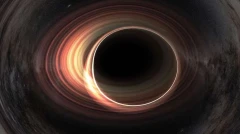
Calculations revealed that such a “slingshot” requires an object thousands of times the Sun’s mass, packed into a region smaller than one astronomical unit (the Earth-Sun distance). A cluster of neutron stars or other known structures couldn’t muster that energy density. The only contender? An intermediate-mass black hole, whose gravity could shred a binary star system and hurl one piece into the void.
The Hills Mechanism in Play
Researchers determined that J0731+3717 fled M15 about 20 million years ago. The Hills mechanism explains it: an IMBH tore apart a binary system containing the star. One partner was swallowed or left orbiting, while J0731+3717 got a colossal kick, launching it into free flight. Confirming this scenario in a globular cluster—a first—makes the discovery a standout.
Intermediate-Mass Black Holes: The Missing Link
Black holes come in three flavors: stellar (5–100 solar masses), supermassive (millions to billions of solar masses), and intermediate (100 to 100,000 solar masses). Stellar ones arise from dying stars, supermassive ones anchor galaxy centers, but IMBHs have been elusive. Thought to be “seeds” for their supermassive kin, they lacked direct proof—until now.
The M15 find shifts the paradigm. An IMBH weighing thousands of Suns backs the idea that these objects form in dense stellar clusters, where frequent collisions and mergers fuel their growth. Over time, such “seeds” might drift to a galaxy’s core, evolving into giants like Sagittarius A*, the supermassive black hole at the Milky Way’s heart.
Why It Matters
The IMBH in M15 isn’t just a rarity—it’s a Rosetta Stone for black hole evolution. If these mid-tier objects are indeed stepping stones, studying them could reveal how supermassive behemoths bulk up. Plus, the discovery showcases modern telescope prowess: Gaia and LAMOST peered into the star’s past, piecing together its dramatic escape.
What’s Next?
Astronomers aim to scour M15 and other globular clusters for more IMBH clues. Each find edges us closer to unraveling our galaxy’s origin story. Meanwhile, J0731+3717, streaking through space, stands as a blazing testament to how one star can unlock the universe’s secrets.