make preferable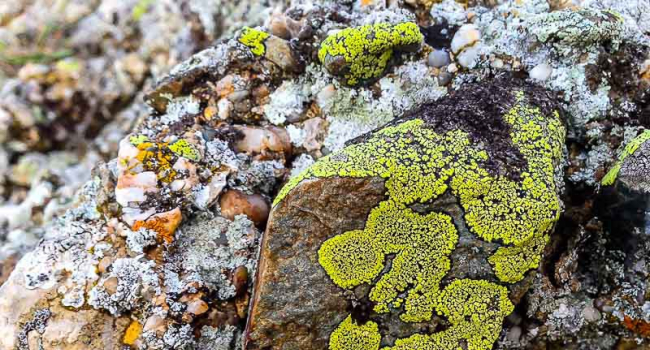
Polish researchers from Jagiellonian University have achieved a breakthrough, proving that Earth’s lichens can remain viable in conditions mimicking those on Mars. Published in IMA Fungus, their study challenges long-held views about where and how life might persist beyond our planet.
An Experiment Pushing the Limits
The team selected two resilient lichen species—Diploschistes muscorum and Cetraria aculeata—known for thriving in harsh environments. For five hours, they subjected these organisms to a simulated Martian setting: an atmosphere low in oxygen (95% carbon dioxide), drastic temperature swings, pressure 100 times lower than Earth’s (about 6 mbar), and intense X-ray radiation equivalent to a year of solar exposure on Mars (50 Gray).
The results were stunning: the fungal component of the lichens, particularly in D. muscorum, not only endured but maintained metabolic activity. Protective mechanisms, like antioxidant production to combat radiation stress, kept functioning despite the hostile conditions. This finding upends earlier assumptions that cosmic radiation renders Mars’ surface utterly inhospitable.
“For the first time, we’ve shown that symbiotic organisms can operate in a Mars-like environment. This discovery prompts us to rethink the boundaries of survivability and planetary habitability,” said lead researcher Kaja Skubała.
Why Lichens?
Lichens are remarkable hybrids of fungi and algae or cyanobacteria, a partnership that makes them exceptionally tough. Their ability to withstand drought, extreme cold, and radiation positions them as prime candidates for studying life in space. On Earth, they thrive in Antarctica, atop mountains, and even in radiation-contaminated zones like Chernobyl.
Mars, with its thin atmosphere (1% of Earth’s), temperatures ranging from -140°C to +20°C, and intense ultraviolet radiation, has long been deemed a hostile wasteland. Yet the lichens’ success in this experiment suggests some life forms might adapt to such extremes.
What Does This Mean for Science?
This short-term test is just the beginning. The team plans to explore how lichens fare over extended periods in Martian conditions. Future steps include trials on the International Space Station (ISS) or as part of Mars missions by ESA and NASA. The BIOMEX experiment on the ISS already demonstrated lichens can survive space’s vacuum; this new study bolsters confidence in their potential.
The discovery also raises a tantalizing question: if Earth organisms can endure Mars today, could native life have existed there billions of years ago when the planet was warmer and wetter? Lichens might serve as a blueprint for hunting traces of Martian extremophiles.
Future Possibilities
The findings excite astrobiologists and engineers eyeing Mars colonization. If lichens can survive, they could help build biospheres or produce oxygen in future settlements. A 2023 Nature study showed certain microbes can convert Martian regolith into nutrients—lichens could complement this process.
“Earth’s extremophiles are a key to understanding life in space. They reveal that the limits of possibility are broader than we imagined,” Skubała concluded.
Conclusion
The Polish team’s discovery is more than a scientific milestone—it’s a hint that life might be tougher than we think. Lichens thriving in Mars-like conditions urge us to reconsider the habitability of other worlds and our place in the cosmos. The next move? Sending them to the Red Planet to see just how far they can go.