make preferable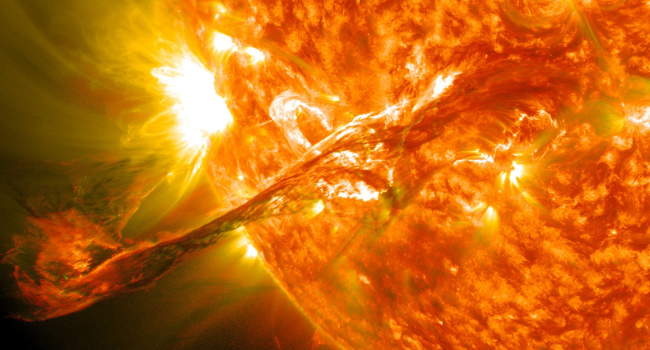
On March 30, 2025, the Sun unleashed five potent M-class solar flares, as reported by the Institute of Applied Geophysics (IPG). This burst of activity has captured the attention of scientists and astronomy enthusiasts alike, given its potential to ripple through life on Earth. Here’s what happened and what to brace for.
Details of the Solar Spectacle
The first flare, classified as M1.4 (S14E82), ignited at 00:38 Moscow time and lasted 33 minutes. Four more followed, all erupting from the same sunspot group, numbered 4048. M-class flares are mid-tier in strength—less intense than the extreme X-class but still packing enough punch to make an impact.
According to the IPG, these flares hurled solar plasma into space, which could reach Earth in 1–3 days. This event aligns with the 25th solar cycle, now nearing its peak, expected around mid-2025. While such activity isn’t unusual at this stage, five flares in a single day stand out as noteworthy.
What’s the Threat?
Solar flares trigger a cascade of effects on our planet. When charged particles slam into Earth’s magnetosphere, they spark geomagnetic storms that can:
- Disrupt power grids, potentially causing outages.
- Interfere with shortwave radio and satellite navigation, like GPS.
- Strain industrial networks, especially in northern latitudes.
Beyond tech, these disturbances can throw off the internal “compasses” of migrating birds and animals. On the flip side, there’s a silver lining: heightened solar activity widens the reach of auroras. In March 2025, these dazzling lights have already appeared in unusually southern locales, like central Russia—a rare treat.
Health Impacts: Fact or Fiction?
The jury’s still out on whether geomagnetic storms affect human health. Some report headaches, fatigue, or blood pressure swings during solar spikes, but hard evidence remains elusive. Studies, including those from the Russian Academy of Sciences’ Space Research Institute, suggest any impact might be personal—or even psychosomatic. Still, doctors recommend rest and self-monitoring during these periods.
What’s Next?
Experts predict solar activity will ramp up over the coming months, peaking in July 2025. That means more geomagnetic storms and auroras lie ahead. The IPG is keeping tabs on sunspot group 4048—if it stays lively, expect additional flares.
To shield technology, precautions are in play: satellites switch to safe modes, and power companies prep for surges. For skywatchers, it’s a cue to keep cameras ready—March might deliver more celestial fireworks.