make preferable
The proton, a cornerstone of all known matter’s stability, might not be as everlasting as once thought. Researchers at Brookhaven National Laboratory in the U.S. have proposed a bold hypothesis: this fundamental particle could decay—and its lifespan might vary across different regions or eras of the universe. Their findings are detailed in Physical Review D (PRD).
Eternal or Vulnerable?
Traditional physics paints the proton as extraordinarily durable. Experiments peg its lifespan at a minimum of 10³⁴ years—a figure so vast it dwarfs the universe’s 13.8-billion-year age by trillions of times. But physicists Peter Denton and Hooman Davoudiasl suggest dark matter could disrupt this stability. Their calculations propose the proton’s life might shrink to 10¹⁸ years—still immense, but short enough to allow decay within cosmic timescales.
Heat of Decay: What the Evidence Says
To test their idea, the scientists explored two scenarios where proton decay might leave clues. First: Earth. Rapid decay would release heat, melting our planet’s solid core. Since the core remains intact, they set a lower lifespan limit of 2 × 10¹⁸ years.
Second: the neutron star PSR J2144–3933, one of the coldest known, with a surface temperature below 42,000 K. If protons decayed significantly, the star would be warmer from the extra heat. This observation established another boundary—1.5 × 10¹⁸ years. Both findings affirm that, even if not eternal, the proton endures for eons.
How to Spot the Signs?
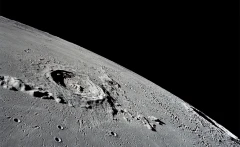
The team suggested creative ways to probe this hypothesis. One involves studying lunar olivine, a mineral that might preserve decay traces over billions of years. Another method: analyzing carbon isotopes in Earth’s natural gas. If protons decay, they could subtly shift isotope ratios, offering physicists a telltale hint.
Why It Matters
If protons aren’t stable, it would upend our understanding of matter. Atoms—building blocks of us and our world—rely on protons and neutrons. Their decay would imply even the universe’s basic components have an expiration date. Beyond that, this could illuminate dark matter, the elusive substance making up 27% of the universe’s mass, potentially influencing particle stability.
A Glimpse into Past and Future
The hypothesis also hints that conditions might have differed in the universe’s past or distant corners. If proton stability varied over time or by environment, it could explain astrophysical oddities—like excess heat affecting star evolution or galaxy formation.
The Takeaway
For now, proton decay remains a theory, but it’s already prompting reflection on how solid our world’s foundations truly are. Denton and Davoudiasl’s work isn’t just academic debate—it’s a bid to peer beyond known physics. Should their ideas hold, we’d gain not only insights into the proton but also a key to dark matter and the universe’s hidden forces. Until then, the proton keeps its secrets, appearing nearly eternal—though perhaps only nearly.