make preferable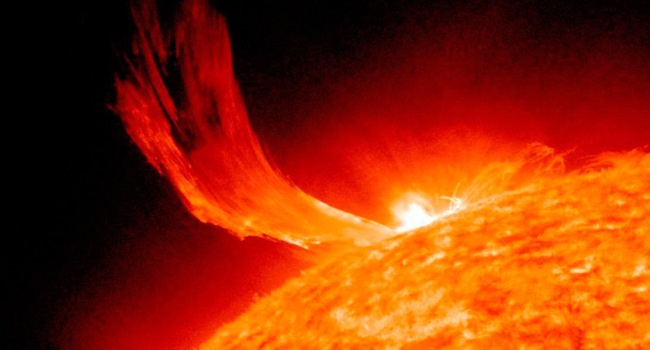
The Sun has entered the peak phase of its 25th solar cycle, which began in 2019 and reached its height in early 2025, according to data from the U.S. National Oceanic and Atmospheric Administration (NOAA) and the European Space Agency (ESA). Scientists are observing a surge in sunspots, powerful flares, and coronal mass ejections—streams of charged particles hurling into space. These events are already impacting Earth, promising both awe-inspiring spectacles and potential hazards.
Cosmic Storms and Skyward Shows
In late 2024 and early 2025, people across diverse regions witnessed a rare sight: vivid auroras illuminated skies even in mid-latitude areas where they’re seldom seen. This dazzling display stems directly from solar activity—charged particles colliding with Earth’s magnetic field trigger geomagnetic storms, painting the heavens in shades of green, purple, and red. Experts predict these “light shows” will grow more frequent in the coming weeks.
But beauty comes with a catch. The same particles that create auroras can disrupt the technologies underpinning modern life. Satellites, radio communications, and power grids face risks when solar “weather” turns turbulent.
An Expert’s Take
Elena Smirnova, a doctor of physical and mathematical sciences and lead researcher at the Institute of Solar-Terrestrial Physics (Siberian Branch of the Russian Academy of Sciences) in Irkutsk, Russia, weighs in:
“We’re experiencing a typical solar maximum, recurring every 11 years. Flares and ejections are intense enough to spark moderate-to-strong geomagnetic storms. These heat Earth’s upper atmosphere, elevate radiation in near-space, and interfere with tech. Recall May 2024—a fierce storm knocked out GPS navigation for hours,” she told novosvyat.ru.
Smirnova notes that while this peak is within normal bounds, its effects are striking. “Auroras are now reaching Russia’s Volga region and other southern areas,” she added. “For scientists, it’s a treat; for power and telecom operators, it’s a cue to brace for disruptions.”
Risks and Precautions
Geomagnetic storms can cripple satellites, scramble radio signals, and even trigger blackouts. A 1989 storm famously left millions in Canada without power. Today’s tech is even more vulnerable, prompting experts to urge stronger safeguards. “We advise telecom and energy providers to stay vigilant and reinforce infrastructure,” Smirnova emphasized.
What Lies Ahead?
Forecasts suggest this peak will persist through late 2025, after which the Sun will ease into a quieter phase. Until then, Earth will ride the waves of cosmic currents—testing our resilience while dazzling our eyes. NOAA and ESA scientists are tracking sunspots and ejections to issue timely storm warnings.
Conclusion
The 25th solar cycle’s maximum is both a technological challenge and a rare chance to witness the Sun’s sway over our planet. Brilliant auroras highlight nature’s might, while tech glitches remind us of our cosmic ties. In the months ahead, Earth will straddle beauty and risk until the Sun takes a breather. For now, let’s marvel at the show—and keep our gadgets ready.