make preferable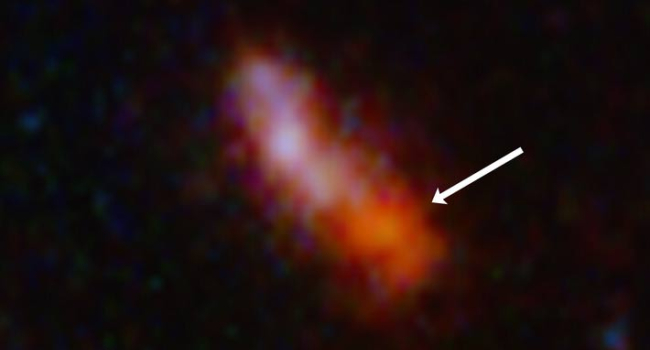
Astronomers have made a stunning breakthrough: oxygen has been detected in JADES-GS-z14-0, the farthest known galaxy. This discovery, enabled by the ALMA radio telescopes in Chile’s Atacama Desert, comes from two independent research teams and is published in Astronomy and Astrophysics (A&A). It upends our understanding of how swiftly the earliest galaxies formed.
JADES-GS-z14-0: A Window into the Universe’s Youth
Discovered in 2023, JADES-GS-z14-0 lies 13.4 billion light-years away. The light we see today left it when the universe was just 300 million years old—under 2% of its current 13.8-billion-year age. Scientists call such objects portals to the cosmos’ infancy, a time when the first stars and galaxies took shape.
Surprising Maturity
Finding oxygen in JADES-GS-z14-0 stunned researchers. Young galaxies like this are typically dominated by light elements—hydrogen and helium—born in the Big Bang. Heavier elements like oxygen emerge later, forged in stellar cores through nuclear fusion and scattered by supernova explosions. Yet this galaxy holds ten times more heavy elements than expected.
“It’s like finding a teenager where you’d expect a baby,” said Sander Schouws, a Leiden Observatory graduate student and study lead. JADES-GS-z14-0 formed and “matured” at an astonishing pace, challenging theories of galactic birth.
ALMA’s Pivotal Role
The Atacama Large Millimeter/submillimeter Array (ALMA) detected faint oxygen emission signals, confirming its presence and pinning the galaxy’s distance with a mere 0.005% margin of error. “It’s like hitting a target within 5 centimeters from a kilometer away,” explained Eleonora Parlanti, a graduate student at the Scuola Normale Superiore in Pisa. ALMA’s precision underscores its power in probing the distant cosmos.
What It Means for Science
The oxygen suggests JADES-GS-z14-0 already hosted and lost at least one generation of stars—perhaps more. This implies star formation and galactic evolution in the early universe raced ahead faster than thought. Were such “mature” galaxies outliers or the norm back then? Scientists are now rethinking the timeline of cosmic growth.
Looking Ahead
This is just the start. ALMA’s data, paired with future observations, will deepen our grasp of how the first galaxies arose and how the universe’s simple hydrogen-helium soup evolved into the complex chemistry that underpins life. JADES-GS-z14-0 teaches us that even at a tender 300 million years, the cosmos could work at breakneck speed.
Conclusion
Oxygen in the farthest galaxy isn’t just a fact—it’s a key to unlocking the universe’s story. JADES-GS-z14-0 reveals that even in its “infant” stage, the cosmos was crafting intricate structures. Thanks to ALMA, we’ve peered further into the past than ever before, and now await discoveries that will illuminate how our world emerged from chaos.