make preferable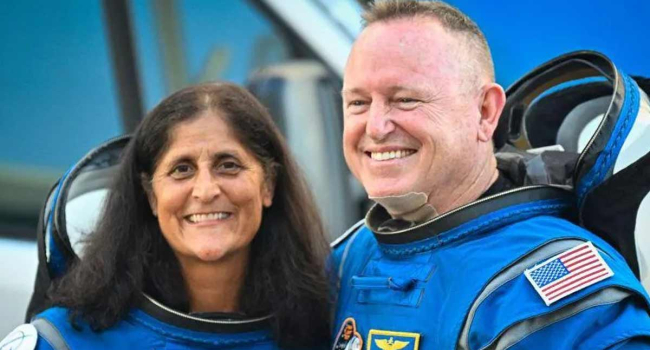
On March 18, 2025, NASA astronauts Butch Wilmore and Sunita Williams safely returned to Earth after an unexpected nine-month stay in space. Originally planned as an eight-day mission to the International Space Station (ISS), their journey ballooned to 286 days due to technical glitches with Boeing’s Starliner spacecraft. Here’s how it unfolded and what it meant for the veteran explorers.
Technical Troubles with Starliner
The mission hit turbulence from the start. Launched on June 5, 2024, aboard Boeing’s Starliner—touted as a next-generation crewed spacecraft—Wilmore and Williams docked with the ISS on June 6. But trouble brewed during the rendezvous: five of the ship’s 28 thrusters failed, and helium leaks compromised the propulsion system. These issues grounded any hope of a timely return.
NASA delayed the homecoming as Boeing scrambled to troubleshoot. By February 2025, further woes emerged—four more thrusters faltered, and helium leaks persisted. With Starliner deemed unfit, NASA pivoted to a backup plan: SpaceX’s Crew Dragon, which arrived at the ISS in late September 2024 with the Crew-9 mission, would bring the stranded pair home. Starliner, meanwhile, returned empty on September 7, landing in New Mexico.
An Extended Cosmic Stay
What began as a two-week trip stretched into 286 days and 4,576 Earth orbits. Wilmore and Williams joined ISS Expeditions 71 and 72, conducting experiments, maintaining the station, and even performing a spacewalk in January 2025. For Williams, the extra time pushed her past a milestone—she now holds the record for the most hours logged by a woman on the ISS, adding to her prior 322 days across earlier missions. Wilmore, with 178 days under his belt before this, also racked up a hefty cosmic resume.
Both former U.S. Navy test pilots took the extension in stride. “We knew spaceflight can throw curveballs,” Wilmore said. Williams called the ISS “my happy place,” thrilled to fly on two different spacecraft despite the detour.
The Journey Home
On March 18, 2025, at 1:05 a.m. ET (05:05 UTC), the Crew Dragon—carrying Wilmore, Williams, Nick Hague, and Alexander Gorbunov—undocked from the ISS. After a 17-hour trek, it splashed down off Tallahassee, Florida, at 5:57 p.m. ET (21:57 UTC). Parachutes eased the descent, with dolphins playfully circling nearby as a scenic bonus.
“The reentry was spectacular—perfect conditions,” said NASA’s Jayden Jennings. Stepping out, the astronauts waved and smiled, capping a saga that began with Boeing’s woes and ended with SpaceX’s reliability.
Reflections from the Crew
Williams admitted she’d miss space but beamed with pride over her record and the mission’s twists. “I’m grateful for it all,” she said. Wilmore echoed her calm resolve: “We were prepared for this. It’s just part of the job.” Their poise underscored why they’re seasoned pros.
Health and Recovery
Russian cosmonaut Sergei Krikalev noted that nearly 10 months in microgravity demands recovery. Bone density loss, muscle atrophy, and molecular shifts are par for the course. “It’ll take about two months,” he said. “They’ll need intense physical rehab.” Still, both stayed fit on the ISS’s exercise gear, emerging in good spirits.