make preferable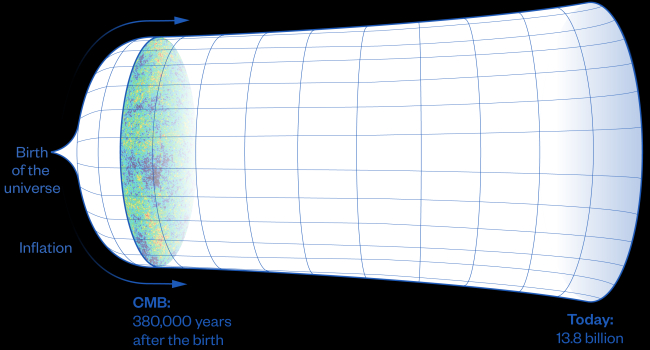
An international team of astrophysicists, led by Princeton University (PU) experts, has revealed the sharpest images yet of the early universe—just 380,000 years old. Published on the university’s official website, these findings capture the cosmic microwave background (CMB)—relic radiation that traveled over 13 billion years to reach us.
The work stems from the Atacama Cosmology Telescope (ACT) in Chile, which mapped matter distribution and tracked its motion by analyzing light polarization.
Light Polarization and Cosmological Confirmation
By studying CMB polarization, scientists traced how hydrogen and helium shifted in the nascent universe. These insights bolstered the standard cosmological model, ruling out many alternative theories about cosmic evolution.
Mass and Age of the Universe
ACT data refined key cosmic stats. The universe’s age is pegged at 13.8 billion years, with a razor-thin 0.1% margin of error. Its observable mass clocks in at 1,900 zetta-suns—nearly two trillion trillion solar masses. Yet, ordinary matter accounts for just 5%, with dark matter and dark energy dominating the rest.
Expansion Speed Puzzle
A standout result was a sharper Hubble constant—the rate of the universe’s expansion. ACT’s CMB-based figure (67–68 km/s/Mpc) aligns with prior relic radiation estimates but clashes with galaxy-motion calculations (73–74 km/s/Mpc). This discrepancy remains a tantalizing riddle in modern cosmology.
What’s Next?
Five years of observations with ultra-sensitive detectors made this leap possible. Beyond deepening our view of the young universe, these images pave the way for fresh explorations in astrophysics and cosmology.
These glimpses into cosmic “childhood” aren’t just pretty pictures—they’re a roadmap to unraveling the universe’s origins.