make preferable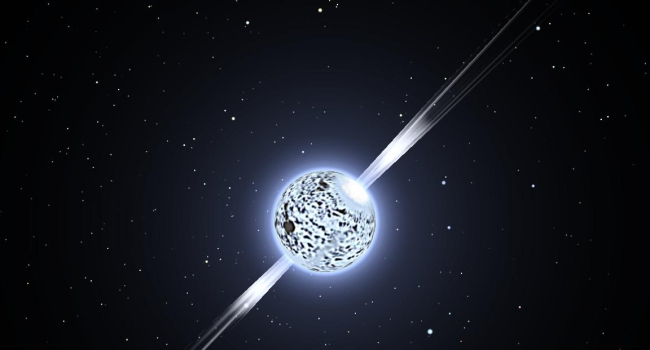
Neutron stars rank among the most astonishing and extreme objects in the universe. Born from cataclysmic events, they boast mind-bending properties that defy our grasp of physics. But what exactly are they? Let’s dive into how these cosmic “monsters” form, what they’re made of, and why they’re so vital to science.
Born in a Supernova’s Fire
A neutron star emerges from the ashes of a massive star—8 to 20 times the Sun’s mass—after it exhausts its fuel. Unable to resist its own gravity, the star’s core collapses while its outer layers erupt in a dazzling supernova explosion, bright enough to outshine an entire galaxy.
During this collapse, the core compresses into an ultra-dense state. Protons and electrons fuse under immense pressure, forming neutrons. The result? A neutron star—a compact sphere just 20–30 kilometers wide, yet packing about 1.4 times the Sun’s mass.
Density Beyond Imagination
Imagine an object where a teaspoon of material weighs as much as Mount Everest—roughly a billion tons! That’s the density of a neutron star. If you could scoop out a chunk and bring it to Earth, it’d explode instantly from decompression, unleashing colossal energy. This insane density comes from cramming nearly all the star’s mass into a tiny volume, where atoms no longer exist—just neutrons jammed tightly together.
Structure: From Crust to Core
Neutron stars have a layered anatomy. Their outer crust is a thin shell of iron and heavy elements inherited from their parent star. Beneath lies a “mantle” of ultra-dense neutron matter. At the core, where pressure peaks, something even stranger might lurk—quark matter or hypothetical “strange” particles. Scientists still debate what’s inside, as such conditions can’t be replicated on Earth.
Magnetic Fields and Spinning Fury
Neutron stars aren’t just dense—they’re dynamic. Some spin at breakneck speeds, up to hundreds of rotations per second. Known as pulsars, these emit radio waves or gamma rays we detect as rhythmic pulses—like cosmic lighthouses. This rapid spin is a legacy of their progenitor’s energy, amplified by collapse, akin to a figure skater pulling in their arms to whirl faster.
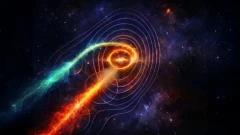
Their magnetic fields are equally jaw-dropping, billions of times stronger than Earth’s. Compressed from the original star, these fields can trigger brilliant flares when the star siphons nearby matter.
Why They Matter
Neutron stars are nature’s extreme physics labs. Studying them tests theories in conditions we can’t mimic. For instance, the 2017 detection of colliding neutron stars via gravitational waves validated Einstein’s relativity and traced the origins of heavy elements like gold and uranium, forged in these cosmic crashes.
Pulsars, with their clock-like precision, double as “cosmic timekeepers” for navigation and gravitational wave hunts. Others, called magnetars, unleash flares so potent they could affect Earth from thousands of light-years away.
Mysteries and Revelations
Even with all we’ve learned, neutron stars brim with unanswered questions. What’s really at their core? Could they bend physics with exotic matter? Why do some become pulsars while others turn into magnetars? Solving these riddles could reshape our view of the universe.
Neutron stars are more than stellar corpses—they’re keys to unlocking the cosmos’ deepest secrets.