make preferable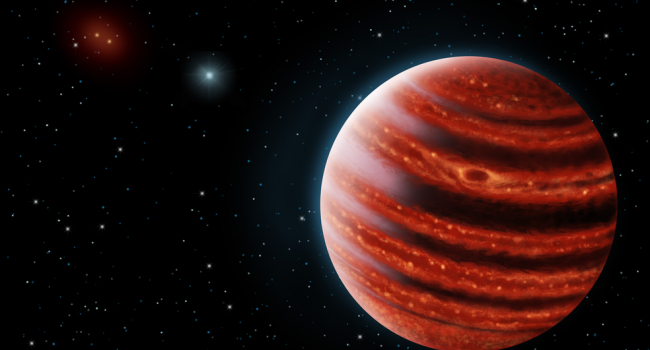
The James Webb Space Telescope (JWST) has made history by directly detecting carbon dioxide in the atmosphere of an exoplanet beyond our Solar System. Published in The Astrophysical Journal, this milestone ushers in a new era of exploring distant worlds and their chemical makeup.
Discovery in the HR 8799 System
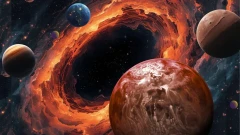
The HR 8799 system, located 130 light-years from Earth, took center stage in this breakthrough. This youthful star system—just 30 million years old—hosts four massive exoplanets. Still glowing hot from their formation, these planets emit strong infrared light, allowing JWST to probe their atmospheres in detail. The analysis revealed heavy elements like carbon, oxygen, and iron—alongside the groundbreaking detection of carbon dioxide, a first for any exoplanet.
Scientists note that the planets’ composition mirrors the formation process of gas giants in our Solar System, like Jupiter and Saturn. This positions HR 8799 as a crucial testing ground for understanding planetary system evolution.
Revolutionary Technology
Until now, exoplanet atmospheres were typically studied by analyzing starlight filtering through them. JWST, however, took a bolder approach. Using coronagraphs to block the blinding light of HR 8799’s star, the telescope captured the planets’ own infrared emissions directly. This yielded precise chemical data, free from stellar interference.
Laurent Pueyo of the Space Telescope Science Institute (STScI) hailed the feat as a game-changer, paving the way for deeper exoplanet studies. It promises to sharpen distinctions between gas giants and brown dwarfs—objects too massive to be planets but too small to ignite as stars.
Carbon Dioxide in Another System
JWST’s prowess was further proven in the 51 Eridani system, 96 light-years away, where carbon dioxide was also spotted in an exoplanet’s atmosphere. This success, even amidst intense starlight, underscores the telescope’s versatility and hints at a wealth of discoveries to come.
Why It Matters
Lead author William Balmer from Johns Hopkins University emphasized that these findings illuminate our own Solar System’s origins. Comparing HR 8799 and other systems to our cosmic backyard could reveal how planets form and what conditions foster life.
The presence of carbon dioxide also aids in distinguishing gas giants from brown dwarfs—a critical distinction. Massive planets can disrupt orbits and stability in their systems, impacting potentially habitable worlds nearby. Understanding their nature is key to the bigger picture.
Looking Ahead
“These giant planets can significantly affect the stability and habitability of other bodies in their systems, so grasping their formation is vital to studying life’s potential,” Balmer said. Carbon dioxide, as a marker of chemical evolution, might one day hint at biological processes on distant worlds.
Detecting it in HR 8799 and 51 Eridani isn’t just a scientific win—it’s a leap toward decoding the universe. With JWST’s unmatched precision, humanity now holds a tool to peer into far-off planets like never before. This is just the beginning, with more cosmic revelations on the horizon.