make preferable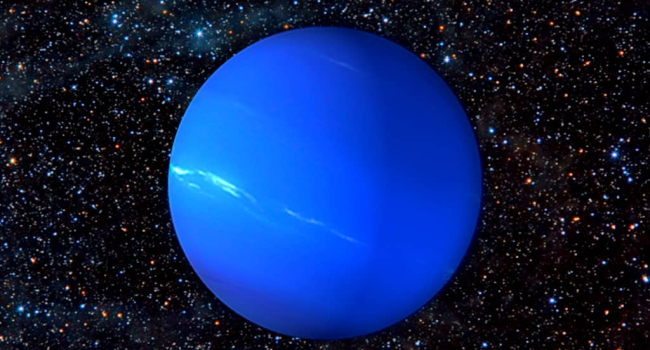
Neptune, the eighth and most distant planet in our Solar System, remains one of the most mysterious and awe-inspiring celestial bodies. Discovered through mathematical predictions rather than direct observation, this icy giant harbors countless secrets. Here are 10 intriguing, scientifically-backed facts that highlight Neptune’s uniqueness.
1. Discovered Without a Telescope
Neptune holds the distinction of being the first planet found through math, not sight. In 1846, French mathematician Urbain Le Verrier and British astronomer John Couch Adams independently predicted its existence by noting irregularities in Uranus’s orbit caused by an unseen object’s gravity. Soon after, German astronomer Johann Galle spotted Neptune through a telescope exactly where the calculations pointed.
2. The Farthest Planet
Orbiting at about 4.5 billion kilometers (roughly 30 astronomical units) from the Sun, Neptune takes 164.8 Earth years to complete one lap. Since its discovery in 1846, it finished its first full orbit by 2011—making it a slow traveler in cosmic terms.
3. An Icy Giant
Classified as an icy giant alongside Uranus, Neptune’s makeup includes hydrogen (about 80%), helium (19%), and methane (1.5%). Beneath its gaseous surface lies a mantle of water, ammonia, and methane ice. Despite its name, there’s no solid ice on its exterior—just a deep, frigid core.
4. Vibrant Blue Hue
Neptune’s striking blue color stems from methane in its atmosphere, which absorbs red light and reflects blue. Yet, its vividness surpasses Uranus’s despite similar compositions, hinting at an unknown factor enhancing its glow—a puzzle scientists are still unraveling.
5. Solar System’s Fiercest Winds
Neptune boasts the strongest winds ever recorded in our Solar System, clocking in at up to 2,100 km/h (over 580 m/s)—nearly twice the speed of sound on Earth! These ferocious storms, driven possibly by the planet’s internal heat, continue to baffle researchers.
6. Mysterious Inner Heat
Unlike Uranus, Neptune radiates 2.6 times more heat than it absorbs from the Sun. This excess warmth, likely generated by core compression or radioactive decay, fuels its dynamic atmosphere and colossal tempests—a stark contrast to its chilly neighbor.
7. The Great Dark Spot
In 1989, NASA’s Voyager 2 captured Neptune’s Great Dark Spot—a massive, Earth-sized storm. It was the first such feature spotted on the planet. By 1994, Hubble found it gone, only for a new spot to emerge elsewhere. These fleeting, dramatic vortices showcase Neptune’s wild weather.
8. Faint Rings
Neptune has a subtle ring system, far less prominent than Saturn’s. First detected in 1984 and confirmed by Voyager 2, its five main rings—named Galle, Le Verrier, Lassell, Arago, and Adams after key astronomers—consist of dark dust and ice, making them tricky to spot.
9. Triton: The Rebel Moon
Neptune’s largest moon, Triton, orbits backward compared to the planet’s rotation—a rarity in our Solar System. Scientists believe it was snagged from the Kuiper Belt by Neptune’s gravity. Active geysers spewing nitrogen dot its surface, marking it as one of the few geologically lively moons known.
10. A Lone Visitor
Neptune has welcomed just one spacecraft: Voyager 2 in 1989. This flyby provided humanity’s only close-up images of the planet, its rings, and moons to date. With no new missions on the horizon, Neptune remains one of the least-explored worlds in our cosmic neighborhood.
Conclusion
Neptune is a realm of extremes—raging winds, enigmatic storms, and icy allure. Discovered through human ingenuity, it continues to captivate scientists with its quirks. Future missions might peel back more of its mysteries, but for now, this distant giant dazzles us with its grandeur and singularity.