make preferable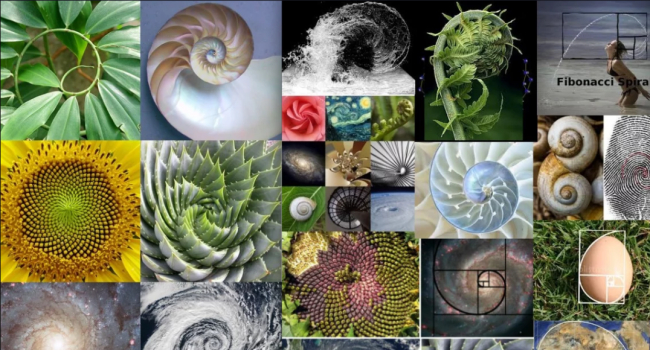
An international team of physicists from the USA and Spain has put forward a revolutionary perspective on the nature of space, time, and entropy. In their study, published in Classical and Quantum Gravity (CQG), they argue that the fundamental structures of the universe adhere to spiral and toroidal (doughnut-shaped) patterns.
The Link Between Entropy, Gravity, and Spiral Structures
Back in the 1970s, physicist Jacob Bekenstein proposed that a system’s entropy depends on its energy and size, tying it to the core laws of space and time. Later, Raphael Bousso expanded this idea, connecting entropy to the surface area of an enclosing sphere and the holographic principle.
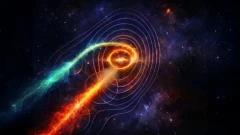
In this new research, scientists revisited these concepts, swapping energy for relativistic mass and linking it to the Schwarzschild radius—the gravitational boundary of black holes. This shift gave rise to a toroidal model, where the inner radius aligns with the Schwarzschild radius and the outer radius corresponds to the enclosing sphere.
Why Does Everything in the Universe Spiral?
The study’s authors assert that this toroidal structure is universal:
- Galaxies twist into spiral forms.
- DNA coils into a double helix.
- Vortices of water, air, and plasma trace curved paths.
This model also hints at a solution to the cosmological constant problem—the puzzling gap between the predicted and observed values of vacuum energy. The researchers suggest that a toroidal framework could naturally balance vacuum energy, reshaping our understanding of dark energy.
Far from a static entity, the universe, they argue, is a dynamic, ever-evolving process. A hidden order emerges through spirals and vortices, spanning scales from subatomic particles to vast galaxies, governed by these fundamental laws. This spiraling dance, the physicists propose, is the universe’s signature rhythm.