make preferable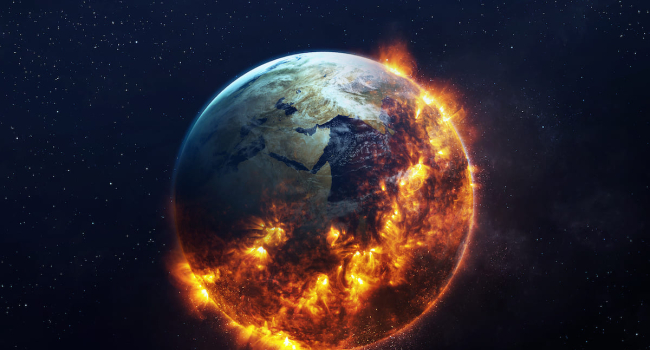
Researchers from NASA and Japan’s Toho University have forecasted Earth’s eventual “end of days,” pinpointing a future where oxygen depletion renders life unsustainable. Their mathematical models suggest this catastrophic shift will unfold roughly 1 billion years from now, driven by atmospheric changes that will doom the planet.
What Will Cause Earth’s Demise?
The primary culprit is the Sun’s gradual expansion. As our star ages, its temperature will rise, altering the atmosphere’s composition and slashing oxygen levels. This transformation will make Earth inhospitable to most life forms. According to the scientists’ estimates, this tipping point will hit in the year 1,000,002,021. Still, they note that technological advances could enable humanity to adapt or relocate to other planets long before then.
Cosmic Dust: Another Universal Enigma
In a parallel breakthrough, German scientists at the Max Planck Institute for Astronomy have crafted the most detailed 3D map of cosmic dust in our galaxy. This milestone will sharpen astronomers’ interpretations of stellar observations and shed light on how dust shapes star formation and galactic evolution.
Cosmic dust distorts the light from distant stars, dimming them and casting a reddish hue. Its pivotal role in birthing new stars remains one of astrophysics’ enduring mysteries, making this map a vital tool for unraveling the cosmos.