make preferable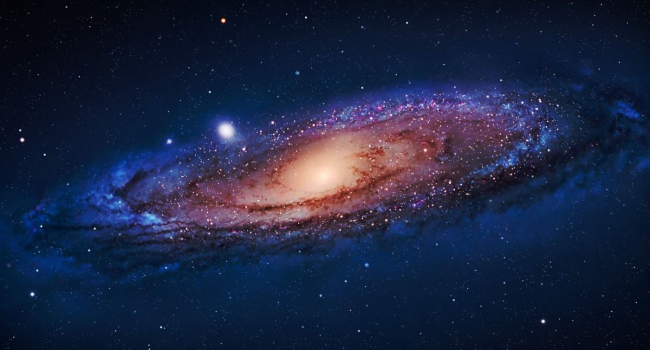
British and Arab researchers have determined that water may have emerged in the Universe as early as 100–200 million years after the Big Bang—well before the formation of the first galaxies. This breakthrough was published in Nature Astronomy (NatAstron).
How Did Water Form in the Early Universe?
Water is composed of hydrogen and oxygen. Hydrogen appeared almost immediately after the Big Bang, while oxygen emerged much later, produced through nuclear reactions in stars and their subsequent explosions.
Scientists explored water formation through computer simulations, focusing on two types of supernovae:
- Stars 13 times the mass of the Sun
- Stars 200 times the mass of the Sun
These massive explosions generated vast amounts of oxygen, which then cooled and combined with hydrogen to form water within dense gas clouds.
When Exactly Did Water Appear?
The timeline of water formation varied depending on the mass of the exploding star:
- For a smaller star (13 solar masses), the process took 30–90 million years, producing water equivalent to one hundred-millionth to one-millionth of the Sun’s mass.
- A more massive star (200 solar masses) generated 0.001 of the Sun’s mass in water in just 3 million years.
How Does This Alter Our Understanding of Life’s Origins?
If water existed before the first galaxies formed, it could have played a role in the creation of planetary systems and even contributed to the emergence of life billions of years ago.
This discovery reshapes our understanding of when and how water appeared in the Universe, highlighting its fundamental role in cosmic evolution.