make preferable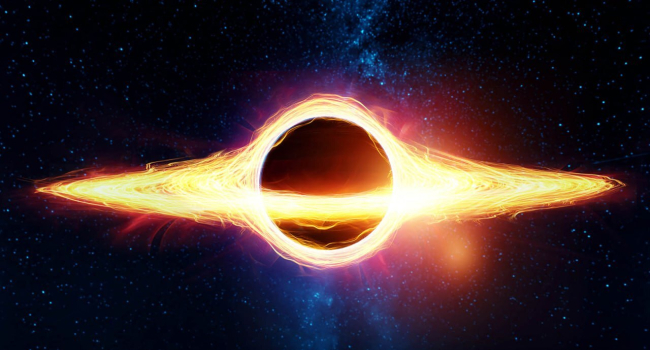
An international team of scientists has used computer simulations to model the magnetic flows around black holes, shedding new light on their role in galaxy formation. The study was published in The Astrophysical Journal (AstroJournal).
How Do Black Holes Generate Energy?
Black holes are famous for devouring matter, but they can also emit tremendous bursts of energy. This phenomenon is driven by accretion disks—clouds of gas and dust that orbit the black hole.
When these disks are highly magnetized, they can tap into the black hole’s rotational energy, triggering the formation of powerful jets—streams of plasma ejected along the poles. However, scientists have long struggled to determine precisely how much energy fuels these jets versus how much is dissipated as heat and light.
What Did the New Models Reveal?
The team explored how magnetic fields interact with black holes spinning at different speeds:
- At low rotation speeds, only 10% of the energy powers the jets.
- At high rotation speeds, up to 70% of the energy is channeled into the jets.
In short, the faster a black hole spins, the more energy it can unleash.
“Falling gas can extract the black hole’s rotational energy and direct it either into light or plasma outflows,” explains Professor Jason Dexter, a co-author of the study.
What’s Next?
Scientists plan to conduct further simulations to investigate how a black hole’s corona—a cloud of hot gas emitting X-rays—forms. This research will deepen our understanding of the processes that turn black holes into some of the universe’s most brilliant light sources.