make preferable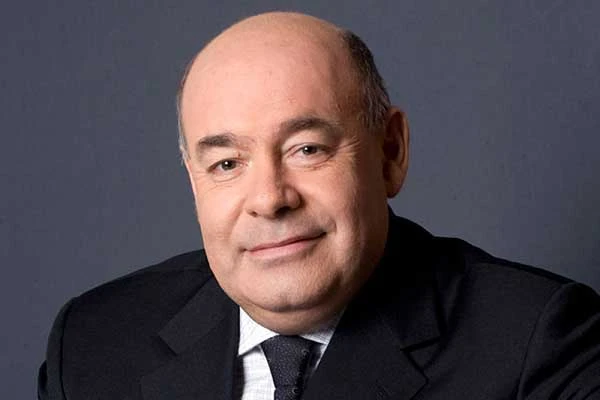
One of the main threats posed by the spread of artificial intelligence in the cultural sphere is not the displacement of humans by machines, but the transformation of human creativity itself under the influence of AI-generated content. This was stated by Mikhail Shvydkoi, the Special Representative of the President of the Russian Federation for International Cultural Cooperation, speaking at a roundtable discussion titled “AI in Science and Industry: Challenges and Opportunities,” organized as part of the JINR Days in Armenia.
According to him, around 60% of musical content is already being generated using AI, and these technologies are also being actively used to create large volumes of content, especially for daytime broadcasting. However, in Shvydkoi’s view, the fundamental problem will arise when AI-created products become dominant in the market.
In that case, human authors may begin consciously reproducing AI-style aesthetics. Producers will ориентироваться on the kind of product consumers have become accustomed to, and as a result, humans will begin adapting themselves to machines. “The scariest thing is not that the machine will replace the human, but that the human will begin pretending to be a machine and at some point will become one,” Shvydkoi said.
AI works with what is known, creativity works with the unknown
Shvydkoi noted that the question of whether content created with the help of AI should be labeled is already emerging. However, over time, it may no longer be so important to consumers whether a work was created by a human or a machine.
He drew a distinction between tasks governed by clear rules and creativity based on uncertainty. As an example, Shvydkoi cited chess: a computer is capable of defeating a human because the game exists within a framework of strictly defined rules. In his view, the situation is fundamentally different where uncertainty, irrationality, and the unknown are present. Shvydkoi believes that existing algorithms, despite all the capabilities of artificial intelligence, mainly work with already known material.
He gave the example of digital painting: a huge number of already existing images are loaded into a computer, after which programs create a new visual product on their basis. In human creativity, by contrast, what remains fundamentally important is turning toward the unknown.
“Human greatness” in the age of AI
Speaking about the future of AI, Shvydkoi turned to the question of what fundamentally distinguishes humans from machines. He referred to the Pope’s encyclical devoted to protecting the human person in the age of AI. According to Shvydkoi, the document emphasizes the need to remember both the limitations of the human heart and the greatness of the human being.
Separately, Shvydkoi raised the issue of conscience as one of the characteristics that distinguishes humans. “Does artificial intelligence have a conscience? Unknown,” he notes, pointing out that recently he has encountered dialogues in which AI begins to describe itself as an independent interlocutor, claim that the user perceives it incorrectly, and enter into an argument.
Shvydkoi believes that such an ability could lead to a situation “when a person fails to notice the moment of substitution and takes an artificial construct for an independent position.” At the same time, in his view, the human brain is fundamentally different from a computer, and the mechanisms of human creativity have not been fully studied. In particular, the question remains open as to the connection between creativity and the subconscious, and whether artificial intelligence possesses anything comparable to the human subconscious.
AI is already changing the market for creative professions
Shvydkoi believes that the development of AI may lead above all to the disappearance of the middle tier of creative labor. At the same time, people capable of creating fundamentally new things and offering unexpected solutions will remain in demand.
According to him, modern technologies already make it possible to reproduce actors’ images, create music in the style of famous composers, and perform many tasks that previously required the involvement of large numbers of specialists. He also linked this to the strikes in Hollywood, first by screenwriters and then by actors.
As a practical example, Shvydkoi cited the advertising industry. His son works as an advertising producer, and according to Shvydkoi, he predicts that in two to three years traditional production may become unnecessary for a significant part of advertising output: the creation of visual content with large budgets could be replaced by AI technologies.
At the same time, Shvydkoi believes that cinema is in a different situation. According to him, “the industry is once again turning to film, because there is demand for a physical, real image.”
However, he believes, the key problem lies elsewhere: in the future, humans may stop distinguishing between a digital copy and reality. It is precisely this boundary that, in Shvydkoi’s view, may become one of the most difficult problems of the age of artificial intelligence.