make preferable
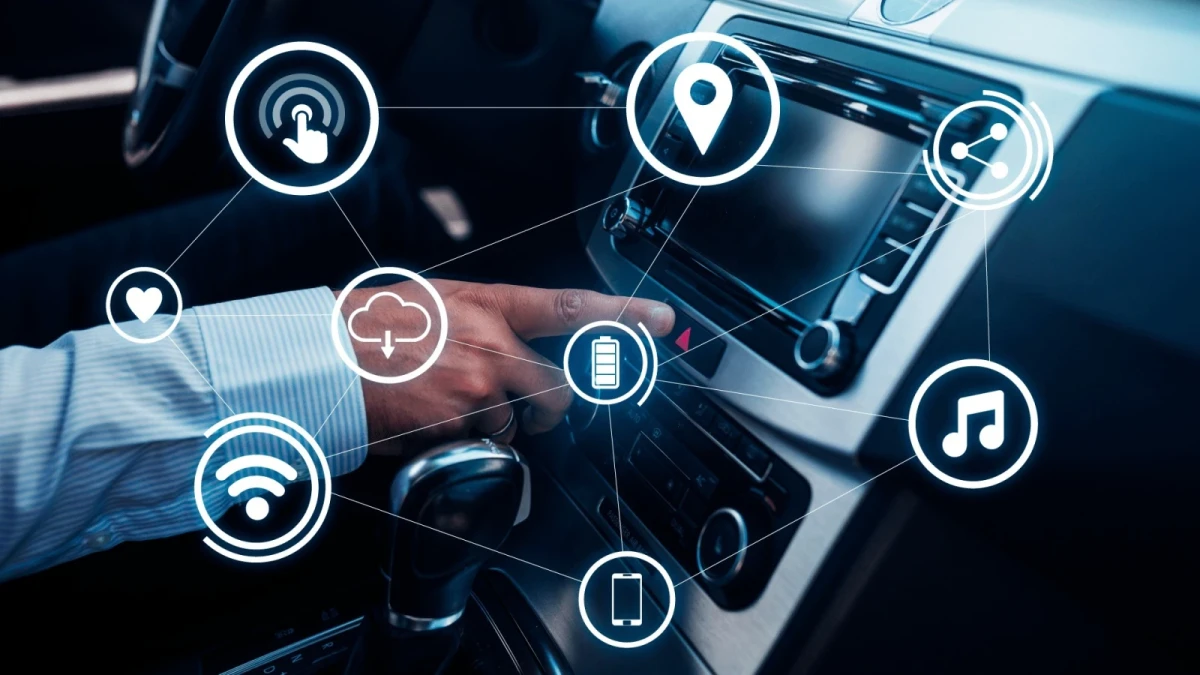
The car is evolving from a means of transportation into a personal AI assistant: it will be able to remember its owner's habits, plan trips, reschedule meetings, coordinate family activities, and carry out errands on its own. But the smarter the car becomes, the more personal information it needs to be trusted with. And the question is no longer just how well the car protects that information, but who else gets access to it.
Automakers are actively developing built-in AI assistants. General Motors, Ford, Rivian, Mercedes-Benz, and BMW are introducing systems designed to make interacting with a car more natural and personalized. However, this race has an unwelcome side: connected cars already collect location and driving behavior data, and new AI systems could gain access to owners' calendars, contacts, schedules, and daily habits.
As a result, a car could potentially know not only where you are going, but also why, who you plan to meet, and what you intend to do after arriving, Axios reports.
From navigation system to personal secretary
Modern in-car assistants are gradually moving beyond voice control for media and navigation. Their goal is to become fully fledged assistants that understand the context of their owner's life.
For example, GM's new OnStar AI assistant will let owners talk to their car in everyday language, control its features, check its condition, and coordinate family activities—including picking up the kids. The system will be able to take the owner's schedule into account and help with everyday tasks.
Rivian is going even further in the direction of personal productivity. Its assistant will be able to reschedule meetings and plan routes to arrive at a specified time. An additional memory feature will allow the system to remember favorite places, restaurants, and usual routes.
This really could make the car more convenient. Owners will not have to explain to the assistant where they usually go, look up addresses manually, or rearrange their schedules themselves every time. But personalization comes at the cost of information.
To reschedule a meeting, the system needs access to a calendar. To remember favorite restaurants, it needs a history of trips and preferences. To coordinate family activities, it needs information about other family members' schedules and routes.
In this way, the car gradually gains access to data that used to be spread across different apps and devices. And the AI assistant could potentially do more than just store it: it could also act independently on the owner's behalf.
This is precisely where convenience becomes a privacy issue. A message sent by mistake, disclosed information about a meeting, or a carelessly executed task could have far more serious consequences than choosing the wrong route.
Cars are already sharing data with third parties
The problem is not limited to future AI assistants. Connected cars are already collecting information about drivers, and the practice of sharing it with outside companies raises serious questions.
GM's case is particularly telling. The company agreed to pay $220 million to settle claims involving allegations that it improperly shared data about drivers' behavior and locations with brokers. According to Reuters, that information then reached insurance companies. Meanwhile, litigation over GM's handling of driver data continues.
A study by Northeastern University in the United States, conducted with Consumer Reports, showed how widespread such connections may be. Of the 21 vehicles tested, 19 connected to third-party servers over Wi-Fi. Researchers were unable to determine exactly what data was transmitted in each case, but they also uncovered another problem: many vehicle-control apps sent sensitive information to advertising and analytics companies.
The information transmitted included vehicle identifiers, email addresses, phone numbers, and precise location data.
This means that even if the automaker itself promises to handle personal information carefully, app developers, digital service providers, and other partners remain part of the chain. Car owners may not even know how many organizations could potentially receive information about their trips.
A similar issue has already emerged outside the automotive industry. Meta's Muse AI assistant raised concerns about how easily systems with access to personal information can reveal details the user never intended to share. In a car, the risks could be even more tangible: they involve a continuous stream of data about a person's movements and everyday life.
Automakers promise more control
Amid growing concerns, companies are trying to reassure buyers that their personal information is protected.
GM has simplified its privacy policy explanations, added settings to manage data sharing, and promised not to sell identifiable vehicle information to third parties. The company also says its new OnStar assistant will process most voice commands directly inside the car without sending them to the cloud. More complex requests are expected to be handled using a GM-controlled version of Google's Gemini model.
Ford, in turn, has introduced a new Privacy Promise program. The company promises not to sell customers' driving data to brokers, emphasizes the importance of transparency, and says it strives to minimize data collection and sharing, de-identify information, and review its suppliers' practices.
There is an important caveat, however: such promises do not necessarily extend to all third-party apps and services that operate inside the car.
Moreover, statements about improved privacy do not always mean changes to the data collection methods themselves. As Ford's chief privacy officer, Christine Jones, acknowledged in a conversation with Axios, the new program does not change the company's existing practices—it simply describes them in clearer language.
Drivers are therefore being offered more information about how their data is used, but that does not yet guarantee full control over it.
You can disconnect—and go back to the 1980s
The most radical way to protect personal information is to disable the car's connected services entirely. Ford even describes this approach as switching to "1980s mode."
But that decision comes at a cost. Disabling data sharing may also disable features that many people buy modern cars for: location-based navigation, finding the car in a large parking lot, certain driver-assistance systems, and other connected capabilities.
For example, Ford BlueCruise, which enables hands-free driving under certain conditions, relies on digital services and vehicle data. And GM's future OnStar assistant will only be able to automatically plan a route to the next meeting if the driver gives it calendar access.
GM representatives say the company is prepared to respect users' choices. According to Michael Wahlstrom, executive director of software product management, if someone does not want to share certain information, the system will work with the data they have permitted it to use.
In practice, however, managing privacy settings is not always straightforward. For the Axios article, a journalist tried changing the privacy settings in a 2025 Ford Maverick, which does not even have advanced AI features or BlueCruise. When she tried to disable data collection, the system warned: "All services that require vehicle data will stop working."
This raises an obvious question: is it worth refusing to share diagnostic information with the manufacturer if it could be useful for maintenance and timely fault detection? And if disabling one setting affects several features at once, how informed can that choice really be?
There is also a simpler problem: most drivers will not carefully examine dozens of settings. People are in a hurry, want to get on the road, and often simply tap "Accept" without looking closely at the terms. Even those willing to work through the privacy settings may not be able to influence third-party apps' data collection.
Convenience paid for with personal information
In-car AI assistants promise to significantly change the familiar driving experience. The car will be able to take schedules into account, remember preferences, help organize family activities, and independently carry out some everyday tasks. But to do so, it will need to learn far more about its owner than a conventional navigation system requires.
The main problem is not simply that the car collects data. What matters is understanding exactly what information it obtains, where that information is sent, who can use it, and how easily the owner can restrict access. And the automaker's promises do not always cover everyone involved in the car's digital ecosystem.
For now, the industry is offering drivers a choice between personalized features and stronger privacy, but that choice remains difficult: refusing to share information may deprive users of useful capabilities, while agreeing may open up access to the details of their everyday lives.
Ultimately, the question is not whether the car can become smarter. It is already moving in that direction. The question is how much personal information a person is willing to entrust to it—and who else will be able to look into that digital biography.