make preferable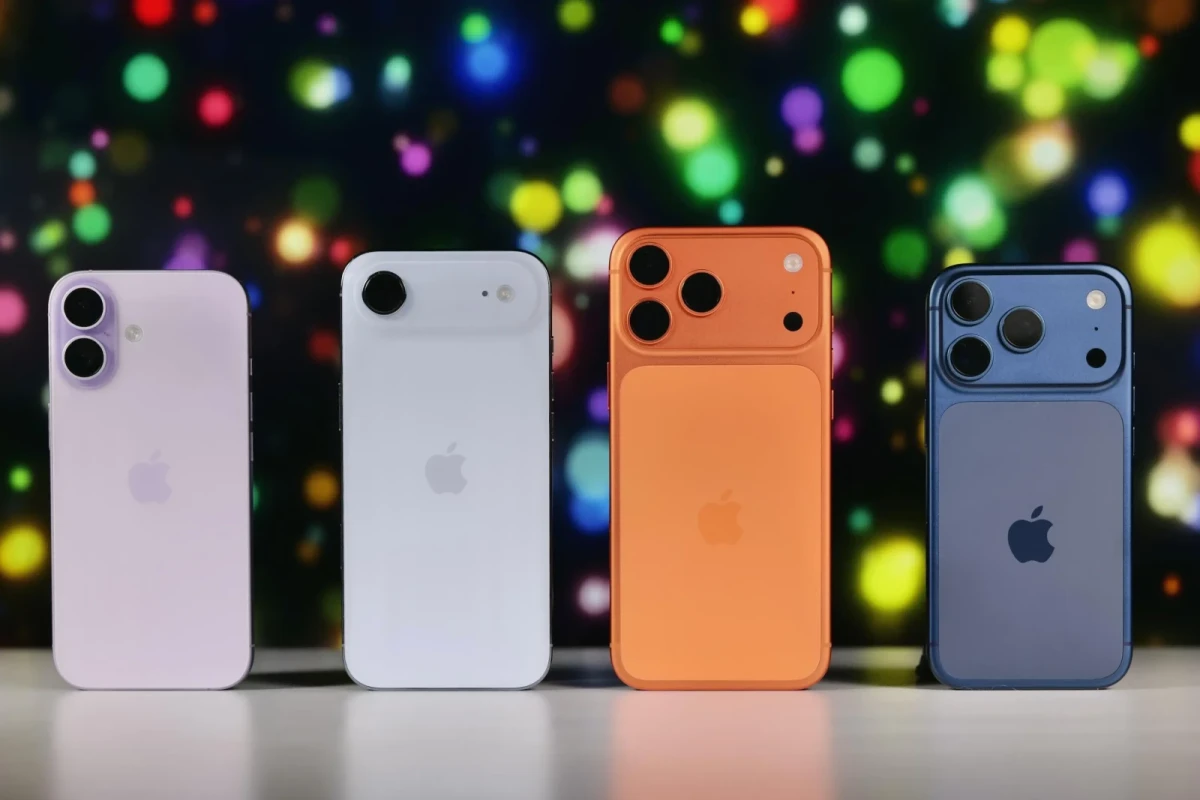
After the release of the iPhone 18 Pro lineup and Apple’s first foldable smartphone — the iPhone Duo — the choice of iPhones in 2026 has changed noticeably. The company discontinued the iPhone 17 Pro models, but continued selling some older devices, and after the new generation’s presentation their prices increased. Gizmochina reviewed the current lineup and highlighted the models that make sense to consider depending on the usage scenario.
iPhone 18 Pro — the most versatile flagship
The iPhone 18 Pro became the main upgrade for those who want the most powerful iPhone in a standard-sized form factor. Compared to the iPhone 17 Pro, it received the new A20 Pro processor, built on a more efficient 2nm process. According to Gizmochina, this provides a noticeable performance boost under sustained workloads.
The main camera upgrade is a new 48-megapixel Fusion main camera with a variable aperture and second-generation sensor-shift optical stabilization system. The aperture now physically switches between four values — f/1.48, f/1.8, f/2.8, and f/4.0. This allows for better control over the amount of light and depth of field, and should also improve low-light shooting.
Battery life has also improved: claimed video playback time reaches about 36 hours versus 33 hours on the iPhone 17 Pro. The smartphone also charges faster, and the maximum storage capacity has increased to 2TB.
At the same time, the dimensions and overall concept of the device have remained almost unchanged. That is why the iPhone 18 Pro is primarily aimed at those who need the most feature-rich standard-size iPhone, especially if the smartphone is often used for photo and video.
iPhone 18 Pro Max — for a big screen and maximum battery life
The iPhone 18 Pro Max received the same key upgrades as the regular Pro model: the A20 Pro processor, a main camera with a variable aperture, faster charging, and storage of up to 2TB.
The main difference is the size. The large display is more convenient for watching videos and multitasking, while the battery delivers up to about 45 hours of video playback. For comparison, the iPhone 17 Pro Max offered up to 39 hours.
That is why the Pro Max advantage is especially noticeable for those who spend a lot of time on their smartphone and are willing to put up with its larger size for the sake of the screen and battery life.
iPhone 17 — a more affordable alternative to the new Pro models
The regular iPhone 17 remains an interesting option for users who do not need professional camera capabilities and the newest processor.
The smartphone is equipped with a 120Hz display and delivers a full workday on a single charge. It also supports the basic features of future iOS versions and Apple Intelligence.
After the release of the new generation, the price of the iPhone 17 increased slightly, but it is still noticeably cheaper than the new Pro models and retains modern specs that will remain relevant for several more years.
iPhone 16 — an option for those who do not need the latest features
The iPhone 16 remains a more budget-friendly way to get a modern iPhone without moving to the current generation.
It has a bright display, a dual camera, and enough performance for everyday tasks. Its capabilities are sufficient for calls, messaging apps, social media, taking photos and videos, and most typical use cases.
The main advantage of this model is the opportunity to save money by giving up some of the features and capabilities of the newer generations.
iPhone Duo — the most unusual option
At the opposite end of the lineup is the iPhone Duo — Apple’s first foldable smartphone. It differs significantly from the other models not only in design, but also in price: the starting price is $1999, and the maximum price is $3199.
At the same time, the Duo does not have a dedicated telephoto camera, and the long-term reliability of the hinge still has to be judged mainly by Apple’s own claims. For a first-generation device, this remains one of the questions that will only be answered after longer-term use.
The Duo concept is aimed at users who need an intermediate format between a regular iPhone and an iPad. If a person already has both an iPhone and an iPad, the need for such a device may not be obvious. But for those who have long been waiting for a foldable Apple smartphone and are ready to pay for a new form factor, the Duo offers the most unusual experience among the company’s models in 2026.
iPhone 17e and iPhone Air have become less appealing
A separate situation has developed around the iPhone 17e and iPhone Air. After a recent price increase, they cost $699 and $1099 respectively in the U.S. — $100 more than their previous prices.
At the same time, both models lag behind the regular iPhone 17 in some important areas. The 17e lacks a 120Hz ProMotion display, while the iPhone Air falls short of the standard iPhone 17 in battery life and charging speed.
For those who specifically want a very thin smartphone, Gizmochina advises waiting for the second-generation iPhone Air, which is currently expected to launch in early 2027. At the same time, the timing and specs of the future model remain the subject of rumors.
As a result, Apple’s 2026 lineup offers quite different use cases. The iPhone 18 Pro and 18 Pro Max are aimed at those who want the maximum capabilities, the iPhone 17 maintains a balance between modern specs and price, and the iPhone 16 remains the more affordable option. The iPhone Duo is a separate case: its high price and new foldable form factor make it a device for a much narrower audience.