make preferable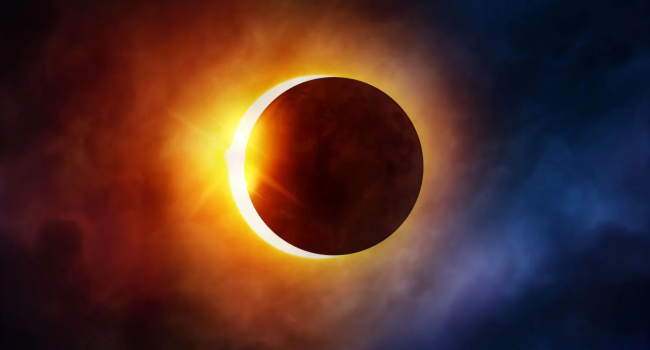
On 12 August 2026, millions of people will witness a total solar eclipse. The Moon will completely cover the Sun's disk, and daylight will give way to twilight for a few minutes.
Where the total eclipse will be visible
Approximately 15.2 million people—residents of Greenland, Iceland, Portugal, Spain, and parts of Russia—will lie within the path of totality. The full covering of the Sun's disk will begin around 16:58 UTC.
Another 980 million people (roughly 12% of Earth's population) will see a partial eclipse. In the United Kingdom and several other European countries, the Moon will cover up to 90% of the Sun's disk. In some northeastern US states, including New York, Maine, and Pennsylvania, the Moon will only take a small "bite" out of the Sun.
Armenia lies east of this zone, so neither the total nor the partial phase will be visible there. This is confirmed by data from TimeandDate and other astronomical services for Yerevan and other cities across the country. https://www.timeanddate.com/eclipse/solar/2026-august-12
It is worth noting that the next solar eclipse visible in Armenia (a partial one) is expected on 2 August 2027.
How to observe safely
Solar eclipses occur during the new moon phase, when the Moon passes exactly between the Sun and Earth and casts its shadow on the planet's surface. During partial phases, looking at the Sun without proper protection can cause irreversible eye damage. Certified solar filters or specialised eclipse glasses are required for safe viewing.
What's next
August's eclipse marks the beginning of a "golden age" of solar eclipses: between 2026 and 2028, Earth will experience three total and three annular ("ring of fire") eclipses.
Those who miss the path of totality can still follow the event via live streams. Details of broadcasts are usually released closer to the date.
In brief
On 12 August 2026, a total solar eclipse will take place. It will be visible to residents of Greenland, Iceland, Spain, Portugal, and parts of Russia—about 15 million people in total. Nearly a billion more will witness the partial phase. The eclipse can only be observed through proper protective equipment. This event kicks off a series of several major solar eclipses over the coming years.