make preferable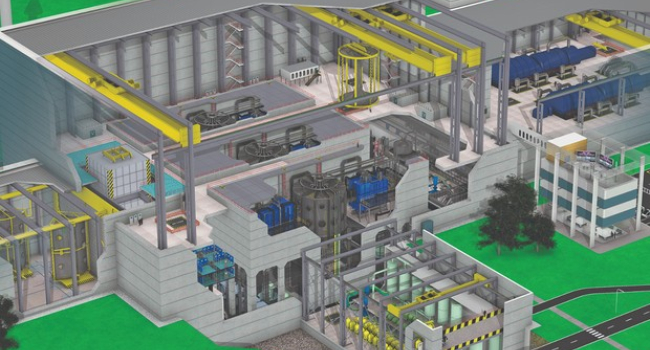
The idea of harnessing nuclear fusion—the reaction that powers the stars—is nearly a century old. For decades, a running joke in the scientific community held that commercial fusion was always thirty years away. Today, however, the race for carbon-free and nearly limitless energy is gradually moving from theoretical research institutes to construction sites and the offices of private startups. As engineers and investors pour billions of dollars into the first commercial projects, a logical question arises: what will all of this actually look like in practice when the first plant finally delivers electricity to the grid?
Layered pie architecture
At the heart of any fusion reactor lies a concept that engineers call onion architecture. At the absolute center of this complex is a cord of white-hot plasma—ionized gas made of hydrogen isotopes heated to an astounding one hundred fifty million degrees Celsius, which is several times hotter than the core of our Sun.
To contain this artificial sun and convert its violent energy into kilowatts, the reactor is encased in several protective layers. At the innermost boundary are the first wall and the so-called blanket. This structure absorbs impacts from fast neutrons, heats up, and simultaneously performs a crucial chemical function—knocking new tritium out of lithium pebbles to sustain the fuel cycle. Just below lies the divertor, which acts as a powerful thermal vacuum cleaner, clearing the helium ash left behind after plasma combustion out of the system.
Enormous superconducting magnets serve as an invisible cage for the incandescent gas. They generate an ultra-powerful magnetic field that keeps the plasma from making contact with the walls—a contact that would prove fatal to the reactor. In modern compact designs, engineers use high-temperature superconductors that must be continuously cooled with liquid helium or nitrogen. Encasing this entire assembly is a massive biological shield—meter-thick walls of concrete and steel guaranteeing that not a single neutron escapes the reactor hall.
The main contenders at the starting line
Today, two key technological approaches have emerged in the race for the first commercial kilowatt, each offering its own vision of the reactor's shape.
The first path relies on traditional tokamaks—reactors shaped like a perfect magnetic donut. This is the exact principle behind the famous international experimental reactor ITER. Its direct commercial successors in European and South Korean programs are titanic structures where the height of the vacuum vessel reaches fifteen meters. However, private capital is stepping on the heels of these state-backed giants. The American startup Commonwealth Fusion Systems is developing a compact reactor named ARC with a capacity of about four hundred megawatts. By utilizing a new generation of ultra-powerful magnets, they managed to reduce the facility's dimensions severalfold and plan to launch as early as the 2030s. Concurrently, the GIGA project is being developed in Europe by Gauss Fusion, where engineers are working out the complete infrastructure—from fuel combustion to safe waste management.
An alternative road has been chosen by the developers of stellarators, a prime example of which is the German Stellaris project by Proxima Fusion. Unlike a tokamak, a stellarator's magnetic chamber features an incredibly complex, twisted shape. Building such a system is exponentially harder, but it allows the reactor to operate continuously without the risk of sudden plasma disruptions, and for a commercial power grid, steady power output remains the top priority.
What it will look like from the street
To a casual passerby, the first fusion plant will not look like an alien structure. An observer's eye will behold a vast industrial park clearly divided into two functional zones.
The first zone will be occupied by a high-tech reactor island. This is a massive building constructed from gray concrete panels, connected to intricate cryogenic pipelines. Adjacent to it will sit dedicated plant infrastructure: gas liquefaction units, vacuum purification systems, and specialized workshops for tritium extraction.
The second half of the complex will consist of a completely traditional power-generating section. The reality is that regardless of how heat is produced—whether by burning coal, splitting uranium, or fusing hydrogen—electricity in power grids is still generated using steam and a turbine. High-pressure, high-temperature water heated inside the reactor's blanket will be sent to standard steam generators, driving the rotors of turbogenerators. Therefore, the familiar giant cooling towers for steam condensation and high-voltage power lines on the output side will be identical to those at any modern thermal power station.
The fusion era will begin not with futuristic castles, but with a pragmatic union of fundamental physics and conventional heavy engineering. If current timelines held by private and state companies withstand the test of reality, the first industrial current from harnessed fusion will flow through the wires in just ten to fifteen years.