make preferable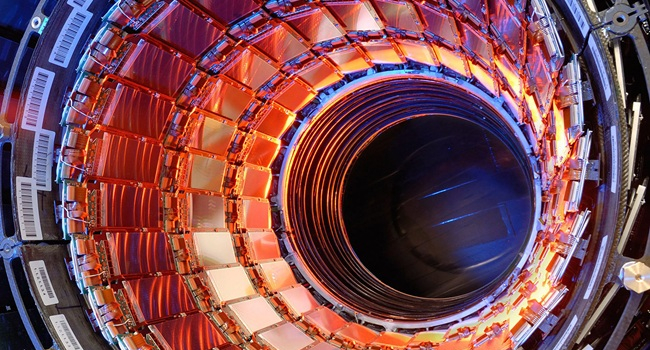
To understand how a particle accelerator works, imagine an unusual experiment with cars. Suppose an engineer creates the fastest car in the world, but soon competitors release a new model that turns out to be even faster. Disassembling it using conventional methods is impossible because the manufacturer used proprietary technology. The only remaining option is to buy two such cars, accelerate them toward each other, and collide them at top speed so that by analyzing the flying debris, one can figure out what they were made of.
The world's largest particle accelerators operate on much the same principle. Instead of cars, they accelerate elementary particles to nearly the speed of light and then collide them, allowing scientists to peer into the most fundamental processes in the Universe.
What a particle accelerator is
A particle accelerator is a machine designed to accelerate elementary particles, such as protons and electrons, to extremely high speeds—roughly 99.99% of the speed of light.
After acceleration, the particles are collided either with a stationary target or with another counter-propagating particle beam.
During the collision, new, very heavy particles are born, such as the Higgs boson or the top quark. They exist for only a tiny fraction of a second before decaying into lighter particles. By analyzing the products of these decays, physicists gain information about the structure of matter and the processes that occurred immediately after the Big Bang.
Types of particle accelerators
All accelerators fall into two main types—linear and circular. A linear accelerator (LINAC) accelerates particles along a straight line using a strong electric field.
A circular accelerator forces particles to move along a circular trajectory, gradually increasing their energy until they collide with each other.
The world's largest circular accelerator is the Large Hadron Collider (LHC), located at the European Organization for Nuclear Research (CERN) on the border between France and Switzerland. The length of its ring is about 27 kilometers.
Because of how they operate, circular accelerators are sometimes called "atom smashers," though in reality they collide subatomic particles rather than whole atoms.
How particle acceleration happens
The operation of any accelerator begins with a particle source. Most often, protons or electrons are used, but modern facilities are also capable of accelerating heavier nuclei. For example, the Large Hadron Collider can work with argon, xenon, or lead nuclei.
Particles travel inside a metal pipe from which nearly all air has been removed. Vacuum is necessary so that particles do not collide with gas molecules and can accelerate unhindered to nearly the speed of light.
Special devices generating powerful electric fields are placed along the entire length of the accelerator. They rapidly flip polarity, creating radiofrequency waves that push the particles forward and gradually increase their speed.
At the same time, numerous electromagnets keep the particle beam on its set trajectory and prevent it from straying.
Where the massive energy comes from
With every new lap, the particles gain additional energy.
In the Large Hadron Collider, protons are accelerated to an energy of 6.5 trillion electron volts.
When two such beams collide, the colossal collision energy turns into matter in accordance with Albert Einstein's famous principle, which states that mass and energy can be converted into each other.
It is precisely thanks to this that extremely heavy particles—whose existence cannot be observed under normal conditions—can appear during collisions.
By studying their properties, scientists gain new insight into the structure of matter and the early stages of the Universe.
Accelerators can be quite small
Although particle accelerators are usually associated with giant scientific complexes, by no means are all of them huge. The first particle accelerator was less than 13 centimeters in diameter. Today, there are more than 30,000 different accelerators operating worldwide, and the vast majority are not used for fundamental science.
Accelerators have long been an important part of modern industry and medicine. Linear accelerators are used in medical diagnostics and radiation therapy for cancer, generating X-rays and high-energy electron beams.
Additionally, accelerators are used in semiconductor manufacturing. They implant the necessary ions into materials to shape the architecture of future microchips. They are also used in many other industrial sectors—ranging from computer chip fabrication to food sterilization, allowing food to be stored at room temperature for extended periods.