make preferable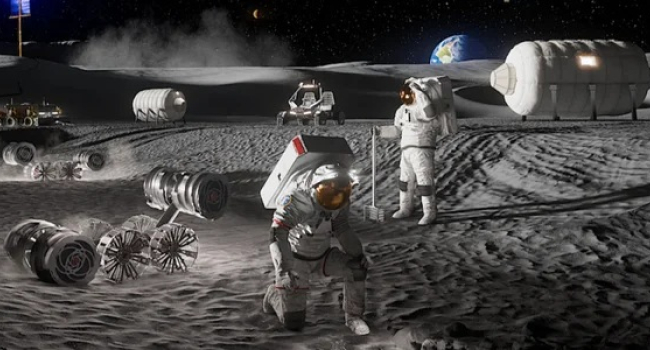
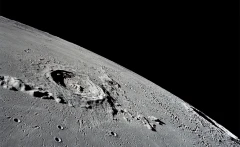
The NASA has unveiled ambitious plans to build a permanent human settlement on the Moon. According to new details, the base will cover a vast area near the lunar south pole and represent the first large-scale off-Earth settlement for humanity.
The announcement was made by agency representatives during a press conference, Space.com reports.
Scale of the base
Carlos García-Galán, head of NASA’s Moon Base program, said that the lunar base is envisioned as a region spanning hundreds of square miles, where different facilities will gradually form a sustained human presence on the Moon.
Construction will take place incrementally over the next decade. Instead of being concentrated in a single location, infrastructure will be distributed across the terrain depending on its function. Habitats are expected to be placed on elevated areas with better access to sunlight, while nuclear power sources will be positioned more than a kilometer away for radiation safety.
A senior program architect, Nujoud Merancy, noted that when all elements are combined, the result would resemble a small city rather than a traditional research outpost.
Hopping drones called MoonFall
For reconnaissance and boundary mapping, NASA plans to deploy small hopping robots known as MoonFall. The first batch of three to four units is scheduled to be launched in 2028 aboard a lander from Firefly Aerospace.
These robots will explore hard-to-reach regions near the lunar south pole and may eventually help mark key scientific zones and define the operational boundaries of the base.
New lunar rovers
NASA has also awarded major contracts for the development of new lunar rovers (LTVs):
- Astrolab — $219 million
- Lunar Outpost — $220 million
These vehicles will be capable of operating both with astronauts on board and in fully autonomous mode. They are expected to be delivered to the Moon via the Blue Moon lander developed by Blue Origin. At least one rover is planned to be operational on the surface by the time of the Artemis 4 mission.
Timeline and construction phases
The base’s development is divided into three stages:
- Phase 1 (2026–2029): detailed reconnaissance and ensuring reliable surface access
- Phase 2 (2029–2032): initial operational infrastructure
- Phase 3 (from 2032 onward): transition to semi-permanent crewed presence
The Artemis program includes multiple milestones, with Artemis 3 (an orbital docking test) planned for mid-2027, and Artemis 4, featuring a crewed landing, expected for late 2028.
Competition and international context
NASA has emphasized the importance of staying ahead of China, which is also developing plans for a lunar base. The agency’s representatives noted that the United States aims to be first in establishing standards for responsible lunar activity under existing space treaties.
In short
NASA plans to build an extensive lunar base covering hundreds of square kilometers near the Moon’s south pole. The settlement will include distributed infrastructure, hopping reconnaissance drones called MoonFall, and new autonomous lunar rovers from Astrolab and Lunar Outpost. Construction is divided into three phases, with early infrastructure expected by 2028–2029 under the Artemis program.