make preferable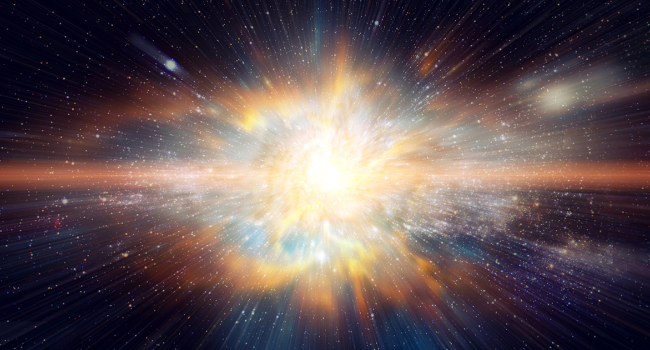
Using NASA’s Fermi Gamma-ray Space Telescope, scientists have for the first time reliably detected intense gamma-ray emission from a superluminous supernova. Astronomers believe the extraordinary brightness of the explosion is caused by the presence of a magnetar — a neutron star with an extremely powerful magnetic field that formed during the explosion itself.
First confirmed detection
During nearly 20 years of observations with Fermi, astronomers analyzed data from thousands of supernovae, but only now have they obtained convincing evidence. The object in question is SN 2017egm, which erupted in the galaxy NGC 3191 about 440 million light-years from Earth.
A researcher from the Institute of Space Sciences in Barcelona explained that scientists had searched for gamma rays from the six nearest superluminous supernovae detected during Fermi’s first 16 years of operation, and only SN 2017egm produced a clear signal.
A magnetar as the “engine” of the supernova
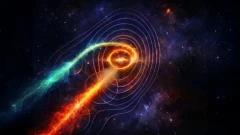
When a massive star runs out of fuel, its core collapses and forms a neutron star. In rare cases, an especially violent collapse creates a magnetar — an object whose magnetic field is thousands of times stronger than that of ordinary neutron stars. Its rapid rotation and extreme magnetic field generate a powerful particle wind that interacts with the expanding supernova shell.
This process creates what scientists call a magnetar wind nebula, where gamma rays are produced and absorbed at very high rates. Part of this gamma radiation is converted into visible light, making such supernovae dozens of times brighter than normal ones.
The study’s lead researcher from Paris-Saclay explained that about three months after the collapse, once the expanding shell cools sufficiently, gamma rays begin to escape into space.
A new window into supernova physics
The Fermi observations support the theory that magnetars provide the extra energy source powering superluminous supernovae. The model successfully explains the behavior of SN 2017egm during the first months after the explosion, although some discrepancies remain at later stages. Researchers believe these differences may result from interactions with material expelled by the star centuries before the final explosion.
The findings were published on May 20 in the journal Astronomy & Astrophysics.
Future studies of similar events are expected to expand dramatically thanks to the upcoming Cherenkov Telescope Array Observatory (CTAO), which will be capable of detecting comparable explosions at distances of up to 500 million light-years.
A scientist from NASA’s Goddard Space Flight Center noted that gamma-ray observations of supernovae offer a completely new way to probe their internal mechanisms.
In short
Using the Fermi telescope, scientists have for the first time reliably detected strong gamma-ray emission from the superluminous supernova SN 2017egm. The additional energy source appears to be a magnetar — a highly magnetized neutron star formed during the explosion itself. The magnetar produces an intense particle wind that amplifies the radiation and explains the extreme brightness of these events. The discovery opens a new avenue for studying the most powerful stellar explosions in the universe.