make preferable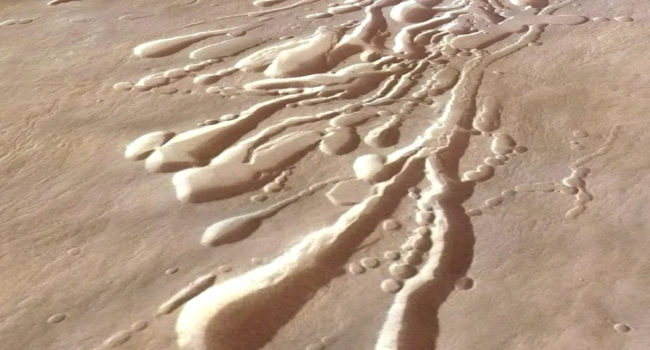
Engineers are increasingly turning to biomimicry—copying solutions from nature—when designing new Mars robots. A research team from New Mexico Tech has proposed an unusual system for studying Martian lava tubes: vast underground tunnels that could help scientists understand the planet’s geological past and potentially serve as shelters for future human settlers.
Why lava tubes matter
Millions of years ago, Mars experienced intense volcanic activity that left behind what is likely the largest network of lava tubes in the Solar System. Some of these structures are more than 250 meters wide and stretch for hundreds of kilometers. Because they are shielded from radiation, extreme temperature swings, and meteorite impacts, scientists consider them promising candidates for future habitats.
However, conventional Mars rovers such as Perseverance and Curiosity are too large to enter these caves. A New Mexico Tech researcher explains that they are roughly the size of school buses and therefore cannot access such confined underground spaces.
The concept of a rolling robot and dandelion-like drones
The New Mexico Tech team developed a design inspired by nature. The main robot is shaped like a pillbug, an insect that curls into a ball when threatened. This so-called rolling robot would be dropped through an opening in the roof of a lava tube and descend to the ground using a parachute.
Inside the main robot would be thousands of extremely small drones inspired by dandelion seeds. After landing, the larger robot would release them into the tunnel system. Strong Martian winds, which can reach speeds of up to 97 km/h, would carry these lightweight drones over long distances, allowing them to map the cave network while dispersing throughout it.
How the “dandelion” drones work
The drones are designed to mimic the structure of dandelion seeds. They are extremely light, white in color to reflect sunlight and reduce heating, and equipped with a flexible polymer that generates electricity through the piezoelectric effect. This allows them to operate without solar panels even in complete darkness.
If wind conditions are insufficient, the system includes a powerful fan to launch the drones manually. Data collected by the drones—such as temperature, humidity, and tunnel structure—would be transmitted via radio signals.
Other research and NASA plans
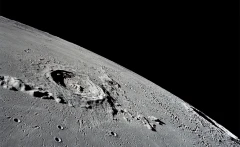
The concept proposed by the New Mexico Tech team is not the only effort in this direction. Since 2023, European researchers have been testing robots in lava tubes on the Spanish island of Lanzarote in preparation for future Mars missions. NASA has also shown strong interest in the Arsia Mons region of the Tharsis volcanic plateau, where multiple skylight openings have been detected in lava tube ceilings.
Thermal measurements suggest that temperatures inside these tubes are more stable, increasing the likelihood that they could preserve signs of ancient life or be suitable for human habitation.
In short
Researchers from New Mexico Tech have proposed an innovative system for exploring Martian lava tubes. It consists of a rolling, pillbug-inspired robot that deploys thousands of tiny drones modeled after dandelion seeds. These drones would be carried by wind, map underground tunnels, and gather environmental data. The approach could become a key tool for studying Mars’ vast lava tube networks and identifying potential sites for future human bases.