make preferable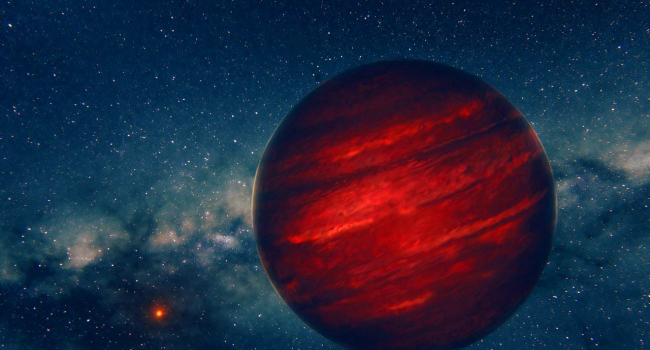
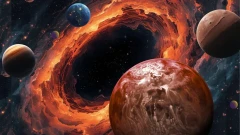
When we talk about planets, we usually think of familiar worlds like Mercury, Venus, Earth, Mars, and the gas giants. But our Solar System is far from the only “family” of planets in the Universe. Billions of planetary “cousins” orbit other stars. These distant worlds are known as exoplanets, or extrasolar planets.
An exoplanet is any planet that orbits a star other than the Sun. Until relatively recently, their existence was purely theoretical. The first confirmed exoplanets were discovered in the 1990s, and today the number has grown to more than 5,000.
How exoplanets are found
Detecting a planet around a distant star is extremely difficult: planets are tiny compared to their host stars and do not emit their own light. To overcome this, astronomers rely on several clever indirect methods.
The transit method is the most productive. When a planet passes in front of its star, it slightly dims the star’s light. It is similar to a child running in front of a lamp and briefly reducing its brightness. By measuring the depth and regularity of these dips in brightness, scientists can estimate a planet’s size and orbital period.
The radial velocity method (or Doppler method) detects a subtle “wobble” in a star. A planet’s gravity pulls its star slightly, causing it to move in a small orbit around their shared center of mass. This motion shifts the star’s spectral lines back and forth in a predictable pattern.
Gravitational microlensing is used to detect planets that are extremely distant or even rogue. When one star passes in front of another, its gravity acts like a lens, magnifying the background star’s light. If the foreground star has a planet, it creates a brief additional spike in brightness.
Space telescopes have become the main “planet hunters.” NASA’s Kepler mission (2009–2018) discovered more than 2,600 planets, while its successor TESS continues the search. Combined with ground-based observatories, these efforts have confirmed over 5,000 exoplanets to date.
Main types of exoplanets
Exoplanets come in astonishing variety. The main categories include:
- Gas giants — massive planets similar to Jupiter or larger. Many are “hot Jupiters,” orbiting extremely close to their stars and reaching temperatures of thousands of degrees.
- Super-Earths — rocky planets larger than Earth but smaller than Neptune. The term refers only to size, not Earth-like conditions.
- Neptune-like planets — worlds similar in size to Neptune with thick hydrogen and helium atmospheres. This is actually one of the most common types beyond our Solar System, even though it does not exist in ours.
- Terrestrial (Earth-like) planets — rocky worlds roughly the size of Earth that could potentially have atmospheres and liquid water.
A particularly intriguing class is that of rogue planets—worlds not bound to any star, drifting freely through the galaxy. Estimates from 2021 suggest that the Milky Way alone may contain between 70 and 170 billion such objects.
Habitable zones and the search for life
One of the main goals in exoplanet research is finding worlds where life could, in theory, exist. For that to happen, a planet must lie within the so-called habitable zone of its star—not too close, where water would evaporate, and not too far, where it would freeze. It must also be rocky enough to support a solid surface.
Estimates from 2020 suggest that the Milky Way could contain up to 300 million potentially habitable planets. However, whether they actually have atmospheres or liquid water remains unknown.
The future of exploration
Modern instruments now allow scientists not only to detect exoplanets but also to study their atmospheres. The Hubble Space Telescope and especially the James Webb Space Telescope (JWST) analyze starlight passing through a planet’s atmosphere, revealing its chemical composition and temperature through spectroscopy.
Several new missions are expected in the coming years:
- PLATO (ESA, ~2026–2027) — will study how planets form and what conditions support life
- ARIEL (2029) — dedicated to analyzing exoplanet atmospheres in detail
Notable exoplanets
Some of the most fascinating known exoplanets include:
- 51 Pegasi b (Dimidium) — the first exoplanet discovered around a Sun-like star (1995), a hot Jupiter orbiting its star in just four Earth days.
- Proxima Centauri b — the closest known exoplanet, just over 4 light-years away, located in the habitable zone of the nearest star to the Sun.
- Kepler-186f — the first Earth-sized planet found in a habitable zone (2014).
- Kepler-452b — often described as one of the most Earth-like candidates, with a 385-day orbit around a Sun-like star.
- HD 189733b — a vivid blue gas giant with extreme weather, including “glass rain” made of molten silicates and winds reaching up to 9,000 km/h.
- WASP-12b — one of the darkest and hottest known worlds, absorbing about 94% of incoming light and slowly being destroyed by its host star.
In brief
Exoplanets are thousands of worlds beyond our Solar System discovered through methods such as transits, radial velocity measurements, and microlensing. They include hot Jupiters, super-Earths, Neptune-like planets, and potentially habitable rocky worlds in the so-called Goldilocks zone. Thanks to missions like Kepler, TESS, and the James Webb Space Telescope, more than 5,000 exoplanets are already known—and many more are waiting to be found. The coming decades may become a golden age in the search for new worlds and, possibly, life beyond Earth.